Mar 14, 2007

Taking Charge


Over at The Daily Dirt, Heleigh Bostwick advises gardeners that one way to get native plant species into your garden is to "take charge of your landscape. Instead of letting the contractor or designer decide which plants use, you be the one to decide what gets planted. Taking charge can be as simple as asking whether a plant is native or exotic and opting for the native plant, or as complex as researching and compiling your own list of native plants for the landscape designer or contractor to use."

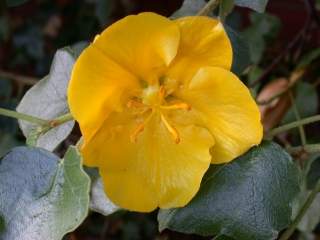
Granted, I've got a bit of a bias here. But with all due respect, the whole reason to hire a designer is because our expertise and experience allows us to develop the plant palette that is uniquely suited to your unique wishes and site conditions. If the average homeowner just went to the nursery and grabbed a bunch of native plants because they're native, well, I doubt the results will be spectacular. Will your soil support a native community? Are the plants you've selected even members of the same community? As I've mentioned before, natives are native because they've evolved to a very specific set of conditions. Woe to the gardener who tries combining a Fremontodendron with a Sisyrinchium.

Heleigh is right: taking charge of creating the plant list is one solution. But it's not the best one. The best solution is to interview landscape designers (or contractors) extensively. Get references to projects that are comparable to yours. Ask to view sites first-hand. If you're afraid they might just be recycling the same plant palette over and over again, ask whether they have a "favorite set of plants" they like to use -- any answer other than "it depends on your unique situation" probably is not a good answer. If natives are important to you, make that one of your defining criteria for hiring a professional. But do hire a professional.

Sometimes the best way to take charge is to delegate.

A Tree Grows In San Francisco

On the heels of San Francisco's Arbor Day festivities, the City has announced its Urban Forest Mapping Project, which digitally pinpoints the location of each tree, maintains tree data in a consistent database, and offers web access to the tree data for maintenance and planting efforts.

This is no small undertaking, and because regular folks like you and I can post photos and stories about our own trees and map them online, it's a great example of how a wiki can help us live not in a collection of gardens, but in a true landscape. Thinking of planting an apple tree and wondering whether there's a pollinator nearby? Check the map. Need to know what that monster down the street is that reseeds itself so prolifically? Check the map.

The map is still in the development stages, but already it encompasses something like 140,000 trees. Check it out yourself: look up your favorite neighborhood or favorite tree... or better still, plant one yourself and add it to the database!

Mar 9, 2007

The Reality of Sustainability

"Even when we are trying to aid the environment, we are not willing as individuals to leave the system that we know in our heart of hearts is the cause of our problems. "

and

"We’re willing to be generous in order to 'save the world' but not before we’ve insured our own survival in the reigning system."

So writes Curtis White in the current issue of Orion magazine. I take his point painfully well: I'm becoming increasingly aware of my unique position to "aid the environment," to design not just gardens but environments that help put things right rather than add to the problems. Yet I'm driving around in an SUV that gets 18 mpg. If estimates are correct, I've sent about 20,000 disposable diapers to the landfill so far (and counting). And I can't help it: I really think landscape lighting is an important element in your yard, even though it does increase your carbon footprint.

I would like to think I can help change the reigning, unsustainable, system. My job, unlike many others described by White's essay, probably has net environmental benefits. But I'm nowhere near being able to live sustainably in my own home, much less overhaul the lifestyles of my clientele who still believe they need massive lawns and impermeable paving everywhere.

I wish White would provide examples of people, companies or roles that he feels are breaking the system. But even so, the larger context of our society and culture places an unfortunate emphasis on "the convenience of money"; so the statement I feel most sympathetic with is White's closing:

"We are not ready. Not yet, at least."

Postscript 3/26/07: Alex Steffen writes a provocative piece on "strategic consumption":
You can be heroic in your efforts, but at the moment it's essentially impossible to live a North American consumer lifestyle and do no harm. You can buy only organic food, recycled products, and natural fibers and you won't get there. You can even trade your car for a hybrid, harvest your rainwater and only run your CFLs off your backyard wind turbine, and you still won't get there, both because the waste associated with consumerism is so massive and because the systems outside your direct control upon which you depend -- from your local roads to your nation's army to the design of the assembly lines used to build your car, rain barrel and windmill -- are still profoundly unsustainable. You quite literally cannot shop your way to a one-planet footprint. The best you can do is nudge the market in that direction.

Yeah. What he said.

Mar 7, 2007

Native Plant Sales this Spring

Mark your calendars… it's time to start loading up on California native plants from the folks who know 'em and grow 'em.

I keep a current schedule of sales on our main site. If you need a nudge to understand why growing natives makes sense in any garden, start with the California Native Plant Society. And of course, these books are always worth reading… or re-reading:


Complete Garden Guide to Native Shrubs of California (1990) by Glenn Keator

Complete Garden Guide to the Native Perennials of California (1990) by Glenn Keator

Growing Native, a bi-monthly newsletter by Louise Lacey, P.O. Box 489, Berkeley, CA 94701, www.growingnative.com, (510) 232-9865.

Mar 2, 2007

Garden Myths, Buried

I've already mentioned I don't like using peat moss, and I just discovered the research to support my disdain. In fact, Linda Chalker-Scott's debunking of horticultural myths is great on many levels: fun, informative, and even profitable if you've ever needed to settle a bet on whether pressure-treated wood leaches its chemicals (it does) or bleach is the best sterilizer for pruning shears (it's not).

Then again, one myth that gets buried is that if it's published, it must be true — et tu, Linda?