Showing posts with label horticulture. Show all posts

May 13, 2010

Two Roses for the Price of One

So your rose bush is blooming magnificently. Bright, big flowers… glossy green leaves… gosh, it's doing so well it's actually blooming in two colors this year!

Uh… not actually.

In fact, if your rose bush is blooming in two colors, I'll wager that one of them is a deep maroon, a little smaller than the other, a little lower on the bush. Probably a little something like this:

If so, you don't have one rose flowering in two colors: you have two roses.

See, most roses sold and planted in California are hybrids — genetic crosses between two different varieties. Not at all Frankenflowers, they're bred this way to give us distinct joy: brighter flowers, glossier leaves, repeat flowering, greater resistance to disease. You can't have it all, though, and what makes them beautiful upstairs makes them weak downstairs.

Enter that miracle of modern ancient technology, grafting. By splicing that gorgeous body onto robust roots that can handle frost, rot, nematodes, fungus, drought, etc., humans figured out that we can have it all.

The only problem, and it's really just a minor one, is that those roots are — by definition — more robust than the body. And just like the body, their prime directive is to grow. Which means you get robust growth… just from the rootstock, not the body.

So those smaller, maroon flowers are "suckers" growing from the rootstock, most likely a variety named "Dr. Huey" (named after a prominent early-1900s rosarian) that is used for almost all California-grown hybrid tea roses because it can handle poor soils, shade, cold, and disease (although it has shown some susceptibility to nematodes in Florida).

Unfortunately, although "Dr. Huey" is beautiful in its own right, if left unchecked its vigor will sap the plant's energy from the more desirable body, the one you presumably bought the plant for in the first place. To prevent this fate, prune the suckers back as close to the primary cane as possible. This directs all that vigor back into the body of the bush… so it can bloom magnificently after all.

May 27, 2009

Our Services are No Longer Needed


…sigh…

Apparently, I'm obsolete. Not as in outdated; just as in, well, redundant.

It's a shame, really, This was going to be a good career. It seemed to have everything I wanted: the chance to create beauty, inspire people, help the planet, soak in a little sun and learn a little Latin.

Sure, I wasn't going to get rich at it. But affording the mortgage by drawing pretty pictures and tromping through plant nurseries? Priceless.

Unfortunately, my secret got out: any blockhead can do what I do. You don't need a degree (never have), you don't need a license. Used to be, for the price of a stack of books you could know almost as much as the experts; now, it's even cheaper than that.

What changed?

The Internet, that's what. Now, without ever leaving the comfort of your couch, you can access primo gardening and landscape design information, from some of the best names out there:
  • Bettter Homes & Gardens
  • Sunset
  • HGTV
  • Fine Gardening
  • About.com

  • OK, so maybe that last one's a little weak. But seriously: how can I compete with Sunset, BH&G, Fine Gardening?! They wrote the book (literally) on what I do. And now, they're offering their decades of experience online, for free. How can I possibly justify charging thousands of dollars for that?

    …sigh…

    Although… I suppose… there is one thing they're not doing. They can tell you how to build a pergola; but they can't tell you what the ideal orientation of that pergola is for your site, or what dimensions would suit your home's architecture the best, or for that matter whether a pergola is the best choice for you in the first place. Hey, that's something, right?

    And, come to think of it, while they can tell you how to find the perfect plants for your yard, they're relying on your interpretations of things like "partial" sun and "moderate" water, not to mention soil texture and fertility, microclimate, or local plant communities. I could help with that!

    For that matter, they can tell you about the coolest varieties of the best species; but they can't tell you whether those varieties really are appropriate for your yard, or where to find them if not at the local nursery. Actually, I'm really good at that!

    Do you know what this means? This could be good news! Not only am I really well-suited to help someone design a garden that's customized for their own unique lifestyle and their own unique site, I'm also able to hold the big-picture vision of that garden, maximize their design to their budget, and put it all down on paper so it can be installed exactly the way we envisioned it. You can't get that from a website, not even from a book! This is great!

    You know, I'm feeling a lot better now. I think there might be a future for me in this business after all.

    Jan 27, 2009

    A Family Affair

    BlueberryArbutusAs your blueberry bushes start blooming, you might notice the flowers look almost exactly like the little bells of madrone (Arbutus). And then you might think, "no, I'm going crazy: one's a smallish deciduous shrub that makes tasty little antioxidant bombs, the other's a big evergreen tree that makes barely-edible globes of mush. No way they're related."

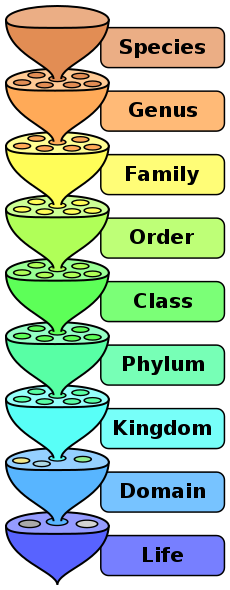
    Not that you're not necessarily going crazy, but they are in fact related, in the botanical family Ericaceae. I've written before about binomial nomenclature in horticulture, distinguishing between the different species within a common genus. Now, we're talking about different genera (plural of genus) within the next higher group, the family.

    While Karl Linnaeus gets most of the credit for his systematic classification of things great and small, the idea of biological families actually comes from one of Linnaeus' contemporaries, French botanist Pierre Magnol. Families tend to be named for one of their genus that typifies the group on the basis of some physical characteristic (e.g. flower structure). In these cases, the suffix "-aceae" simply gets tacked on to the stem of the botanical genus name. Thus, the genus Rosa (i.e., the rose) was determined to be representative of a group of plants with common reproductive characteristics, so that group was given the family name Rosaceae (pronounced "rose-ACE-ee-ay". Other families include:
      -Aquifoliaceae (named for the aquiline leaf margins of the holly, the only living genus in this family)
      -Caprifoliaceae (named because the leaves resemble the cloven hooves of goats)
      -Graminaceae (the grass, or grain (grass seed), family)
      -Leguminaceae (the legume or bean family, aka Fabaceae (think fava beans)

    (Because the Rosaceae tend to produce delicous fruits — from rose hips to apples, pears, stone fruits, strawberries, almonds — as well as flowers that stir the soul, one of my favorite instructors Quin Ellis was fond of saying that the grass family may have set the dinner table for civilization… but the rose family provided dessert.)

    If you want to geek out on this even more than we already have, the Department of Biology at St. Louis University has a very nice discussion of biological nomenclature; for the "lite" version, see the Dummies Guide. But back to the humble blueberry: its family Ericaceae also includes, not surprisingly, cranberry and huckleberry; the aforementioned Arbutus and its cousin Arctostaphylos (manzanita); azaleas and rhododendrons; and the eponymous Erica, genus of heaths and heathers. And while I noticed the similarities between the flowers, in fact the most common trait is the foliage structure: smooth-edged, single leaves arranged alternately along the stems. (Good thing, too: to develop a more robust root system and better fruit yields, I strip the flowers off for the first three years.)

    Dec 29, 2008

    A Very Wood Day

    Look, Ma, no stubs!
    Yesterday I spent a lot of time in the company of wood, from pruning my scarlet oak to (finally) stacking up the firewood that used to be our old and decrepit acacia tree.

    The stacking was a particularly tedious exercise, puzzling out the best match between the voids in the pile and the weird sizes and shapes of the logs. But somehow it seemed appropriate that the process should be so slow: after all, that tree took probably 30 years to grow. And it occurred to me that gardens are not for the impatient, no matter how "finished" we ever believe they are.

    One of the first questions I ask a new client is, "How soon do you want the garden to be grown in?" This is a question of budget as much as time, because there's an exponential relationship between plant size and cost. But even beyond the individual plants, the garden as a whole is a dynamic system, and may not come into its own for five years or more after planting. The new trees and shrubs will create shade where none existed before; flowers can reseed; rhizomes will spread, annuals will come and go, and patterns of water and fertility will change.

    All this chaos isn't for the faint of heart. It takes a lot of faith to allow a landscape to do its thing, season after season. Those with something to prove insist on perpetuating an illusion of control, with tightly clipped hedges and perfectly timed blooms. Keeping up appearances makes for a great business; just ask the Stanford Shopping Center, who keeps designer nonpareil Jackie Gray and three full-time gardeners employed to make its environment as lush as it is luxe. But for those of us who are of lesser means, or perhaps more comfortable with nature actually looking and feeling natural, we don't mind the beautiful mess — or the time it takes to evolve.

    May 28, 2008

    4 Degrees of Separation

    What a difference four degrees makes.

    That's the difference in latitude between my office in Palo Alto, Calif. (37.4 degrees, just south of San Francisco) and my current vacation spot in Carlsbad, Calif. (33.1 degrees, just north of San Diego).

    Up north, we can't grow Jacaranda mimosifolia very successfully due to our typically frosty and occasionally freezing winters. Down here, the tree's vibrant lavender blooms are pretty much ubiquitous this time of year.

    Up north, our soil is heavily influenced by at least four local ancient volcanoes — mounts Diablo, Hamilton, Tamalpais and Sonoma — with a resultant fertility that made today's Silicon Valley the original "Valley of Heart's Delight." Down here, with the nearest volcanoes some 4–5 hours away, the local soils are much more estuarine, sandy and lacking the minerals and clays that nourish "exotic" plants.

    Up north, Palo Alto averages about 15" of rain annually, contributing to a mostly foothill woodland native plant habitat bordering on evergreen forest. Down here, Carlsbad averages about 7" of rain annually, creating a predominantly coastal sage scrub community.

    Up north, our average summertime high temperature is above 78° Fahrenheit. Down here, the average summertime high temp is just under 74°F. However, thanks to the famous San Francisco fog, at night we can drop 22°F — while closer to the equator, Carlsbad drops only 10°F.

    Obviously there are pros and cons to each latitude, but you can see how just a few degrees of separation can significantly affect environments and lifestyles. Where would you rather live? And if prognostications of global warming expanding the equatorial zones are correct, and Palo Alto comes to resemble Carlsbad and Carlsbad comes to resemble Puerto Lobos, how would your lifestyle change?

    May 21, 2008

    Never Do This To Your Tree

    The interface between "developed" spaces and "protected" ones is an increasingly hot topic. Lots of properties around here abut open space harboring coast live oak (Quercus agrifolia) trees; I recently came across one of these California natives living on county land just across someone's property line, and growing at such a tilt to push against the residential wall that post-dates it by probably 20 years.

    Now, these trees are only slightly more precious than gold around here, and this tree in particular is under county care; so in such a case usually the wall would be sacrificed to the cause. However, in this case someone has decided to adjust the tree instead. But by cutting through the protective bark and into the cambium and even heartwood of the tree, they've severely interrupted the flow of water and nutrients from the roots up the trunk to the foliage. And this is major surgery: deep and rough cuts which are unlikely to heal well (if the tree can muster the energy to heal them at all before it dies).

    I'm sure I gasped audibly when I saw this, and the homeowner was equally shocked to learn about it. No one seems to know who made the cut, or when, although it certainly looks fresh. Trees are remarkably resilient, with the ability to compartmentalize wounds and adapt to adversity. But with about one third of this tree's vascular system removed, I would guess it has a very, very poor prognosis indeed.

    May 16, 2008

    A Tale Of Two Roses

    So your rose bush is blooming magnificently. Bright, big flowers… glossy green leaves… gosh, it's doing so well it's actually blooming in two colors this year!

    Uh… not actually.

    In fact, if your rose bush is blooming in two colors, I'll wager that one of them is a deep maroon, a little smaller than the other, a little lower on the bush. Probably a little something like this:

    If so, you don't have one rose flowering in two colors: you have two roses.

    See, most roses sold and planted in California are hybrids — genetic crosses between two different varieties. Not at all Frankenflowers, they're bred this way to give us distinct joy: brighter flowers, glossier leaves, repeat flowering, greater resistance to disease. You can't have it all, though, and what makes them beautiful upstairs makes them weak downstairs.

    Enter that miracle of modern ancient technology, grafting. By splicing that gorgeous body onto robust roots that can handle frost, rot, nematodes, fungus, drought, etc., humans figured out that we can have it all.

    The only problem, and it's really just a minor one, is that those roots are — by definition — more robust than the body. And just like the body, their prime directive is to grow. Which means you get robust growth… just from the rootstock, not the body.

    So those smaller, maroon flowers are "suckers" growing from the rootstock, most likely a variety named "Dr. Huey" (named after a prominent early-1900s rosarian) that is used for almost all California-grown hybrid tea roses because it can handle poor soils, shade, cold, and disease (although it has shown some susceptibility to nematodes in Florida).

    Unfortunately, although "Dr. Huey" is beautiful in its own right, if left unchecked its vigor will sap the plant's energy from the more desirable body, the one you presumably bought the plant for in the first place. To prevent this fate, prune the suckers back as close to the primary cane as possible. This directs all that vigor back into the body of the bush… so it can bloom magnificently after all.

    Apr 21, 2008

    A Little Cold For April


    If you're thinking the last few days have been a little cold for April, you're right. In fact, yesterday San Francisco tied its record low for the date and Oakland set a new record, according to NBC11.

    By itself the cold snap wouldn't be a problem; but with the weather so deliciously warm for the past few weeks, just about every last plant that had been holding on to dormancy has decided it's finally time to bust out the buds... which leaves them vulnerable to these frosty conditions.

    Making the problem worse is the wind, which can chill us down another 10 degrees or more and, even worse, increases the rate at which plants transpire (i.e. lose) water. So the biggest danger isn't actually freezing: it's dehydration.

    Ironically, the best defense is the same practice you would use on the hottest days of summer: water your plants, slow and steady, at least once if not twice a day. Make sure the irrigation arrives right onto the soil around the plant's dripline — ideally you have a low-flow system so there's little or no loss, but if you do have spray heads make sure they're not wasting water up into the air. The breeze is often calmest in the pre-dawn hours, so that's a good time to irrigate with little fear of the wind carrying the water away.

    (On a side note, if your system is "misting" clouds of water up into the air, your system may be operating with too much water pressure — usually a result of improperly sized pipes. If you can, choke down or manually reduce the flow to your irrigation mainline to see if the misting stops.)

    Also, make sure your mulch is adequate: I like to recommend a 2- to 3-inch deep layer of redwood bark or coco hulls, but I've also taken to using the coffee grounds my local java joint bundles up and sets aside. (By the way, they smell awesome for a day, then they just smell like stale Folger's.) Mulch helps the soil retain water, and it also creates the cool, aerated conditions that beneficial mycorrhizae love. No doubt the weather will warm up again soon, and your plants and soil will be prepared for their next challenge: our Mediterranean summer.

    Mar 11, 2008

    Next Stop, Spring

    Winter reveals the garden's bones.With only a forecast of showers next weekend standing between us and Spring, now's your last best chance to take care of those winter to-do items and get your garden ready for peak season.

    First, cut back grasses to about 6" above ground level, to make room for the coming flush of growth. If perennials such Mexican sage are beginning to regrow from their base, cut those back as well. Woody shrubs such as Salvia greggii, hydrangeas, viburnums and dogwoods may also be showing new growth along their old branches; I trim these back to just above a new growth node about 1/2 or even 2/3 back from the ends.

    Second, clear out anything that's obviously dead. Give serious thought to also removing any specimens that struggled last year: it wasn't a particularly brutal year, so anything that didn't thrive probably is in the wrong location (or receiving the wrong care) and won't do much better this year. With this riffraff gone, step back and evaluate the "bones," or basic structure, of your garden. Are there gaping holes? Overly (or underly) vigorous specimens? Poorly shaped trees or large shrubs that are blocking light, views or paths? "Dead end" views with no payoff? Make a list; I use a map of the garden with numbered items in place.

    Third, revisit your garden wish list. Is there anything you wish for more of: color, fragrance, movement, wildlife? Anything you've seen in your travels -- whether plants or pots, furniture, lighting, or other ornaments -- that you'd like to try replicating at home? Again, make a list, collect pictures, and start (or update) an idea file. If possible, also identify a budget and prioritize your list into "must have," "nice to have," and "if I win the lottery" levels of importance.

    Fourth, give your "tools of the trade" a checkup. Run your irrigation systems and check coverage and pressure; test hoses for leaks; check lighting systems for burned out bulbs or broken fixtures; and sharpen your shovel, spade, hoe, pruning shears, loppers, and lawnmower blades (many local hardware stores offer sharpening services). Also make sure your gloves, knee pads, hat and other gear are in good shape.

    Finally, make sure your team of garden experts is at the ready. This might include a landscape designer, landscape contractor, fine gardener, arborist, irrigation specialist, and/or nursery. And if you'll be doing the work yourself, schedule a massage (or chiropractor visit) for the next day. After all, there's no reason all this work can't have its rewards.

    Feb 18, 2008

    Public Radio Sounds Green

    Today's edition of Forum on KQED featured a most informative discussion of the Light Brown Apple Moth, and the recent announcement of California's plans to spray pesticide to eradicate it.

    In other news, yesterday's edition of Fresh Air featured a most informative interview with the author of Banana: "a primer on the expansive history — and the endangered future — of this seedless, sexless fruit."

    Jan 14, 2008

    Mad for Moss


    Maybe I've been watching too much NFL, but with Randy, Santana, Sinorice, and Jarvis all hogging the headlines, it's no wonder I've got moss on my mind. But I'm not thinking about the 200-pound, fast-as-lightning gridiron gods; I'm thinking about the tiny green stuff that ever so quietly blankets the masonry and glows emerald in the morning light.

    And I'm thinking about it because it's time to give my urbanite retaining wall a little verdance of its own, and there's nothing like the green patina of moss to create a feeling of age and presence. But where to start?

    Online, there's a lot of talk about moss, but fairly little detail. To create the slightly acidic environment moss prefers, some people recommend blending samples of moss along with some buttermilk, then painting the resulting slurry onto the desired surface. Others recommend using beer instead of buttermilk. Still others recommend beer and buttermilk. There's also advice to just lay the moss down like miniature sod, and even to use super glue.

    Not wanting to introduce cyanoacrylate into my garden, I think I'll stick with the Osterizer approach. But which additive? How much? I certainly don't have a definitive answer, so I'm going to try a few different approaches and report here on the progress. I've also read that potter's clay or a water retention gel can help the mixture adhere to a rocky surface, so I might try either that (or perhaps some of my clayey garden soil).

    My first step is to collect some mosses that are growing locally, in conditions and locations comparable to my intended target. It doesn't get much more local than the front walk of the house across the street, as well as the driveway and Quercus lobata next door. I'll use a putty knife to scrape the moss up, "roots" and all, then divide it up into portions and blend each into a different recipe. Then I'll use a paint brush to spread the mess onto my rock wall… and wait!

    Sep 17, 2007

    You Say Feijoa, I Say... Acca?!

    I recently learned that the pineapple guava tree, formerly known as Feijoa sellowiana, is now going by Acca sellowiana.

    This sort of re-naming, while confusing, isn't uncommon: Stipa tenuissima is now Nassella, Diosma pulchrum is now Coleonema, Atriplex spinosa is now Grayia, Laurentia fluviatilis is synonymous with Isotoma fluviatilis is synonymous with Pratia pedunculata, and so on. Which begs the question, if these supposedly sacrosanct botanical names can be so fluid, why do they matter?

    It helps to understand the difference between botanical, or "scientific," names and common, or "vernacular," ones. While common names such as "pineapple guava," "breath of heaven," and "blue star creeper" roll easily off the tongue (and offer ample opportunity for seductive descriptions in mail-order catalogs) they are imprecise, usually relying on associations not obvious to everyone. What is a "lily of the valley" to you? An herbaceous perennial, or an evergreen shrub? For some real entertainment, peruse Wikipedia's list of plants by common name: not only can you see why ordering a "white birch" could get you into trouble, but you'll also see that a brown daisy, yellow daisy, black-eyed Susan, and brown-eyed Susan are all the same plant, depending somewhat arbitrarily on where in the U.S. you live.

    Botanical names, on the other hand, are determined systematically rather than arbitrarily, and are consistent throughout the world. Every species has one, and only one, botanical name; and that name describes not only its unique characteristics but also its relation to other species. This system was developed by the premier 18th-century naturalist Carl Linnaeus, who classified all living things hierarchically by their common characteristics rather than, say, geographic origin. In botany, we are usually most concerned with the genus and species names; less frequently with the larger family or the smaller subspecies and/or varietal names. So our old favorite the black-eyed Susan can most accurately be described as Rudbeckia hirta — that's genus Rudbeckia, species hirta, which tells us it's related to yet different from Rudbeckia fulgida and Rudbeckia laciniata. (Now we only need to decide whether we mean the variety R. hirta var. angustifolia, or R. hirta var. pulcherrima.)

    Seems pretty straightforward, right? Well, not quite. In a future post, I'll talk a bit about the "Deep Green" project spearheaded by Brent Mishler at Berkeley, which aims to trace plants' evolutionary paths and reclassify them in a cladistic, not Linnaean, manner — meaning that the venerable Zea mays would be renamed Mays Zea Gramineae Monocots Angiosperms Eukaryota Life. Not quite as poetic, perhaps, but technically more accurate… and definitely more precise than "corn."

    Jul 30, 2007

    A Tree Grows At Stanford


    We all know Stanford University is the pinnacle of knowledge west of the Atlantic Ocean. But while we might expect binary trees, expression trees and one particularly silly mascot, did you know the University's founder also planned a great arboretum that would be a veritable "zoo for trees," taking advantage of the region's moderate climate to grow rare and notable species from every corner of the globe?

    Unfortunately, what remains in the original arboretum space planned by Frederick Law Olmsted are mostly eucalyptus and oak species as well as the palms on eponymous Palm Drive and elsewhere. The oaks are native, explicitly protected by Senator Stanford; the eucalypts were planted as fast-growing "nurse trees" to offer shade to tender exotic transplants while they established, then be removed.

    As the Stanford News Service reports, in the financial crisis following the Senator's untimely death "the arboretum was neglected. Most specimen trees failed, while the heartier eucalypts flourished." When backers revived plans for the arboretum, they "upheld Stanford's vision for maintaining wooded open space, but departed from his notion of trees from around the world in favor of species native to California."

    Nevertheless, today Stanford hosts a remarkable diversity of not only trees but also shrubs, vines, grasses and native plants, catalogued and annotated online in a tremendous resource. Horticultural notes, leaf silhouettes, tree walk maps, and more await you. Whether or not you've seen it on campus, this is a quick and gorgeous go-to guide for identifying, or selecting, that perfect specimen.

    Mar 2, 2007

    Garden Myths, Buried

    I've already mentioned I don't like using peat moss, and I just discovered the research to support my disdain. In fact, Linda Chalker-Scott's debunking of horticultural myths is great on many levels: fun, informative, and even profitable if you've ever needed to settle a bet on whether pressure-treated wood leaches its chemicals (it does) or bleach is the best sterilizer for pruning shears (it's not).

    Then again, one myth that gets buried is that if it's published, it must be true — et tu, Linda?

    Jan 2, 2007

    Happy New Garden!


    Cold and blustery as it may be, there's no shortage of seed catalogs arriving, brimming with mouthwatering optimism. As usual, I want one of just about everything; I'm especially enamored with High Country Gardens' new pink and orange Agastache, which I can imagine pairing with a blue Agave attenuata, and Burpee's new tricolor basil, a perfect partner for a striped tomato.

    What do you want in your garden this year? Or, more accurately, what do you want your garden to do for you this year? Do you want it to save you time? Save you money? Do you want to help save the planet? Or save your soul?

    Gardens can do all of these things, and more. If you're into new year's resolutions, make this one: that you will enlist the services of a great garden designer ("great" being subjective, as in, "great fit for you") to make even a small improvement to your yard. I guarantee you, the effects will be anything but small.

    May 5, 2006

    Water Smart

    The Irrigation Association has proclaimed that July will be "Irrigation Month." Even though that's a couple months away, it's never too early to develop some good watering habits that will save money, benefit the environment, and create a healthy landscape. I don't know anyone who doesn't have an automatic irrigation system already, but the following tips from The Irrigation Association will make your system even more efficient:

    Adapt your watering schedule to the weather and the season. Familiarize yourself with the settings on your irrigation controller. Adjust the watering schedule regularly to conform with current weather conditions.

    Schedule each individual zone in your irrigation system. "Scheduling" accounts for the type of sprinkler, sun or shade exposure and the soil type for the specific area. The same watering schedule should almost never apply to all zones in the system.

    Inspect your system monthly. Check for leaks, broken or clogged heads, and other problems, or engage an irrigation professional to regularly check your system. Clean micro-irrigation filters as needed.

    Adjust sprinkler heads. Correct obstructions that prevent sprinklers from distributing water evenly. Keep water off pavement and structures.

    Get a professional system audit. Hire a professional to conduct an irrigation audit and uniformity test to make sure areas are being watered evenly. This can be especially helpful if you have areas being under-watered or brown spots. The Irrigation Association maintains an online list of IA Certified Landscape Irrigation Auditors.

    Consider "smart" technology. Climate- or soil moisture sensor-based controllers evaluate weather or soil moisture conditions and then calculate and automatically adjust the irrigation schedule to meet the specific needs of your landscape. Learn more at http://www.irrigation.org/swat/homeowners/.

    Install a rain shutoff switchInexpensive, effective, and required by law in many states, these money-saving sensors turn off your system in rainy weather and help to compensate for natural rainfall. The device can be retrofitted to almost any system.

    Consider low volume drip irrigation for plant beds. Install micro irrigation for gardens, trees and shrubs. Micro irrigation includes drip (also known as trickle), micro spray jets, micro-sprinklers, or bubbler irrigation to irrigate slowly and minimize evaporation, runoff and overspray.

    Water at the optimum time. Water when the sun is low or down, winds are calm and temperatures are cool - between the evening and early morning - to reduce evaporation. You can lose as much as 30% of water to evaporation by watering mid-day.

    Water only when needed. Saturate root zones and let the soil dry. Watering too much and too frequently results in shallow roots, weed growth, disease and fungus.

    Mar 24, 2006

    The Smart Gardener

    I've just wrapped my third show for HGTV's "Landscape Smart," transforming an entire backyard on a tight budget and an even tighter schedule. As always with these shows, it was an exercise in discipline; and it evokes some principles to keep in mind even if you're just replanting a border:

    Think small. Include details that will really give your project that stand-out quality -- a water feature, a specimen plant, a coat of paint -- and invest disproportionately more of your time and money into making them shine.

    Think big. The smaller the project, the more important its raison d'etre. Whether it's an outright theme or just a big idea, express it boldly and completely, from the smallest plant to the tallest structure.

    Be relentless. Even professional designers get overwhelmed by choices. The tendency is to overcompensate, tossing in some of everything for insurance. Don't do it! Keep your focus, and trim away everything that doesn't advance that big idea. Cut your plant palette by half; and even reduce your budget. The creativity this demands will burn like an overworked muscle... but you'll make smarter choices for it.

    Be gentle. Especially if your time or budget is limited, you'll probably have to compromise some good ideas and abandon others entirely. It can be hard to let go, and the disappointment can shake your confidence. But don't take it as a failing: look instead at how much you're achieving despite the limitations. And add those good ideas to your garden journal -- you never know when you'll have the chance to implement them after all.

    A friend of mine installed her entire yard herself, with a baby in tow, in one week while her husband was out of town. It's an amazing feat (especially since she had no landscaping experience) and a beautiful garden. Her secret, she confides, was to dig the holes and buy the plants for only six feet at a time; that way she was never far from being finished.

    Which illustrates my last principle: Be reasonable. Don't bite off more than you can chew. As another friend is fond of saying, "done" is better than "perfect." And it's a lot more fun, too.

    Mar 17, 2006

    Luck O' The Plantsman


    Looking for that four-leaf clover today? Try wild oxalis, or sorrel... subterranean clovers useful as cover crops... and decorative clovers that do well in almost any damp location.

    Just beware the yellow oxalis, 'cause it's as weedy as it is fluorescent. And if you have a wide-open space where you're considering putting in lawn, plant a nitrogen-fixing clover there for the next couple of years instead. With a little mowing, it might do even better than grass... and if not, at least it'll enrich the soil with plenty of nitrogen: just till it into the soil before putting in the turn, and your lawn will thrive!

    Oct 10, 2005

    Much Ado About Mulch

    Although you wouldn't know it to look outside, it's about to get rainy around here. Which means this is an ideal time to lay down a good, thick layer of mulch on your garden. No matter what material you use -- redwood nuggets, shredded fir bark, or organic compost -- it's recommended to keep at least 2" to 4" atop your soil. This helps suppress weeds (which won't get enough sunlight to germinate); retain moisture (which can't evaporate so readily); and, as tends to happen in dark, damp places, encourage the growth of fungus.

    In particular, we use mulch to encourage mycorrhizae, a group of fungi that develop symbiotic relationships with the plants around them: in exchange for gleaning micronutrients from the plants, the fungi deliver water, oxygen and other nutrients to the plants. And because the mycorrhizae can grow into webs spanning hundreds of feet or more, plants in mycorrhizae-rich environments have access to far more food and water than might be delivered to just their own root zone. This makes mycorrhizae particularly valuable to native plant species, which have adapted to grow in lean soils and dry conditions. But no matter what your garden is growing, or when you plan to plant, it's a good idea to pile on the mulch now.

    Sep 21, 2005

    Taking The Fall

    [Note: Verdance clients originally received this article at the beginning of this month, as part of our free monthly newsletter on gardens and gardening. To subscribe to the newsletter yourself, please register at verdancedesign.com.]


    Have you noticed yet? Nights are cooling off, leaves are showing red, and — my favorite — the sunlight is softer and more golden. Autumn is here! The equinox occurs on Sept. 22, and then nights will outlast days until March.

    I'm often asked, is fall the best time to plant in the Bay Area or not? While I wouldn't delay a project by 6 or 9 months just for the season's sake, it definitely beats summer: plants are less stressed, need less water, and have more time to develop healthy roots before next year's heat.

    Another good reason to plant over the next few months is that nurseries have terrific inventory now. Sure, there are some sun-baked has-beens on the racks, the runts that never quite endeared themselves to other gardeners, but lots more are in fine shape, a little mildewy or root-bound at worst. (And frankly, I even view the runts as opportunities, tests of my horticultural mettle.)

    Of course, if you're looking to add a little fall color to your landscape, now's also the time to shop. Look for Chinese pistache, crape myrtle, sour gum, oakleaf hydrangea, Boston ivy and Virginia creeper, Japanese and other maples, and ornamental grapes, cherries and pears. And don't forget about plants with interesting berries or seeds: grass plumes positively glow when backlit by the rich autumn sun. (If you would like ideas on what or where to plant for best effect in your garden, just let me know.)

    Since those fiery reds, oranges and yellows actually only appear in the absence of green clorophyll — and since clorophyll production typically stops as plants retreat into winter dormancy — you can encourage autumn colors by sending signals now that summer is over. Stop watering established plants (short of wilting them) to discourage new growth; and locate new trees, shrubs or vines in full sun for the most extreme temperature changes as nights get colder.

    One class of plants that clearly benefits from fall planting, although they're not much for fall color, is California natives. These take advantage of the winter rains to develop robust root systems that can endure our long dry summers. I'll say more about natives in future posts, but for now check the California Native Plant Society for lists of botanic gardens, nurseries, and plant sales — yet another reason to love autumn in the Bay Area.