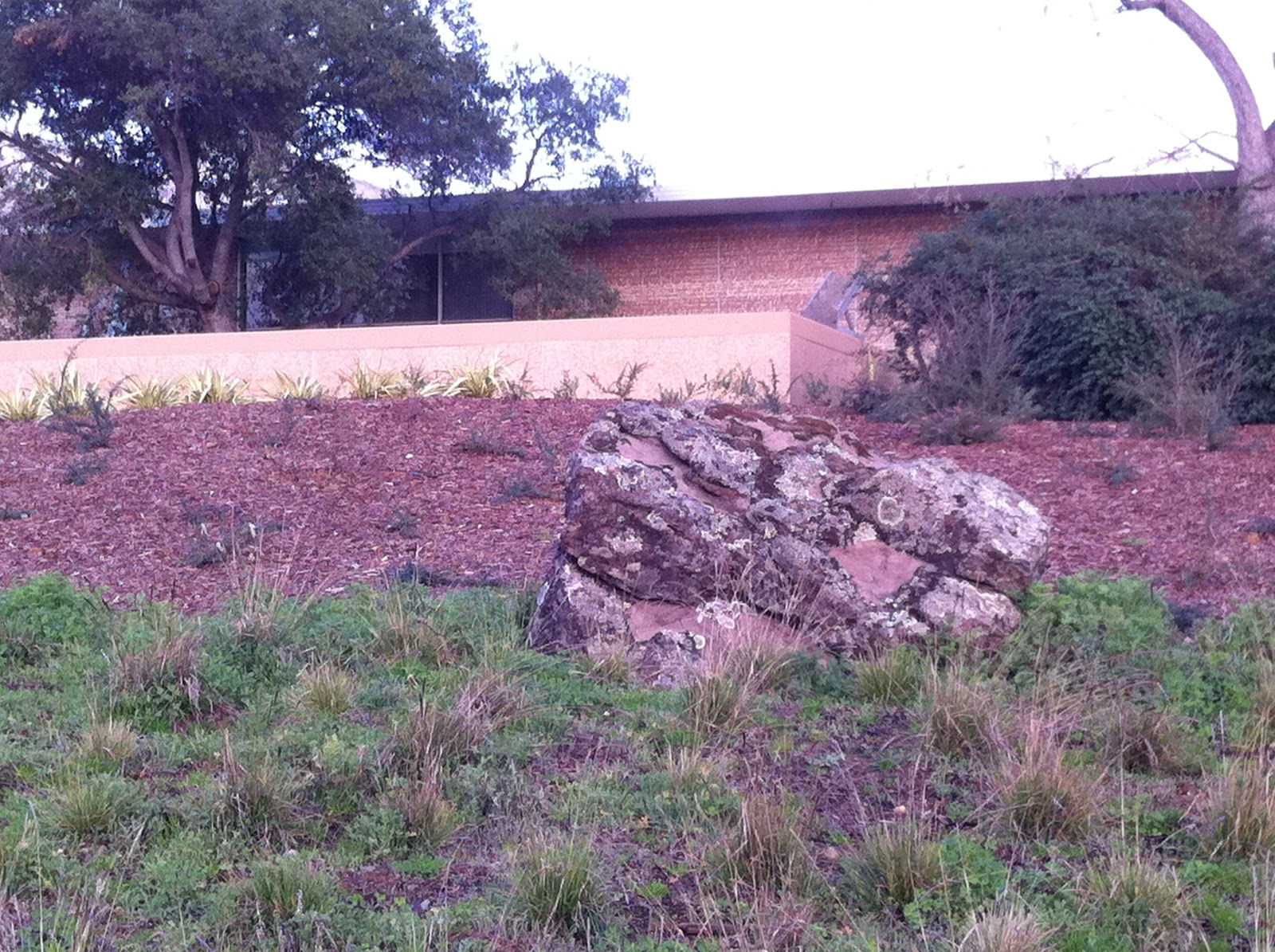
Outside, the entry driveway circles around a center median that is not contained by a raised curb. On the one hand, this is useful because it allows the median to receive stormwater from the surrounding pavement, an effective environmental strategy (the Center earned LEED Silver certification). On the other hand, the absence of a curb means that vehicles can — and do — cut the turn and drive through the planter. This means more orange cones, and a chronically muddy mess that always seems to hold standing water. It's too compacted to sustain plants, and they'd probably get driven over anyhow. The lesson here? Turns require far larger radii than we may think: at least 15-20' inside radius for a passenger car, more for service vehicles such as delivery trucks, and a correspondingly large outside radius so the front outside corner of the vehicle's bumper can sweep through the turn without hitting tangential walls or parked cars or people. If you've absolutely got to have a tight turn without a curb, at least don't put plants inside the curve — use paving stones or some other material that can take the abuse.
Speaking of cars and people, it's always useful to remember that people get into and out of vehicles, and enjoy a bit of clear space in which to do so. This isn't exactly a "big guy," but it is a useful reminder that heavily armed plants such as Agaves — as well as spiny Berberis, Pyracantha and roses, and even sharp-foliaged plants such as Mahonia and Picea (spruce) — make great barriers but usually aren't great selections for a space where people or pets will be passing close by. On the other hand, though, I'd wager this tree hasn't suffered a door ding or the indignity of dog pee in years, so maybe this planting strategy is genius after all — "right plant, right place" doesn't always mean what we think.