Showing posts with label natives. Show all posts

Dec 22, 2009

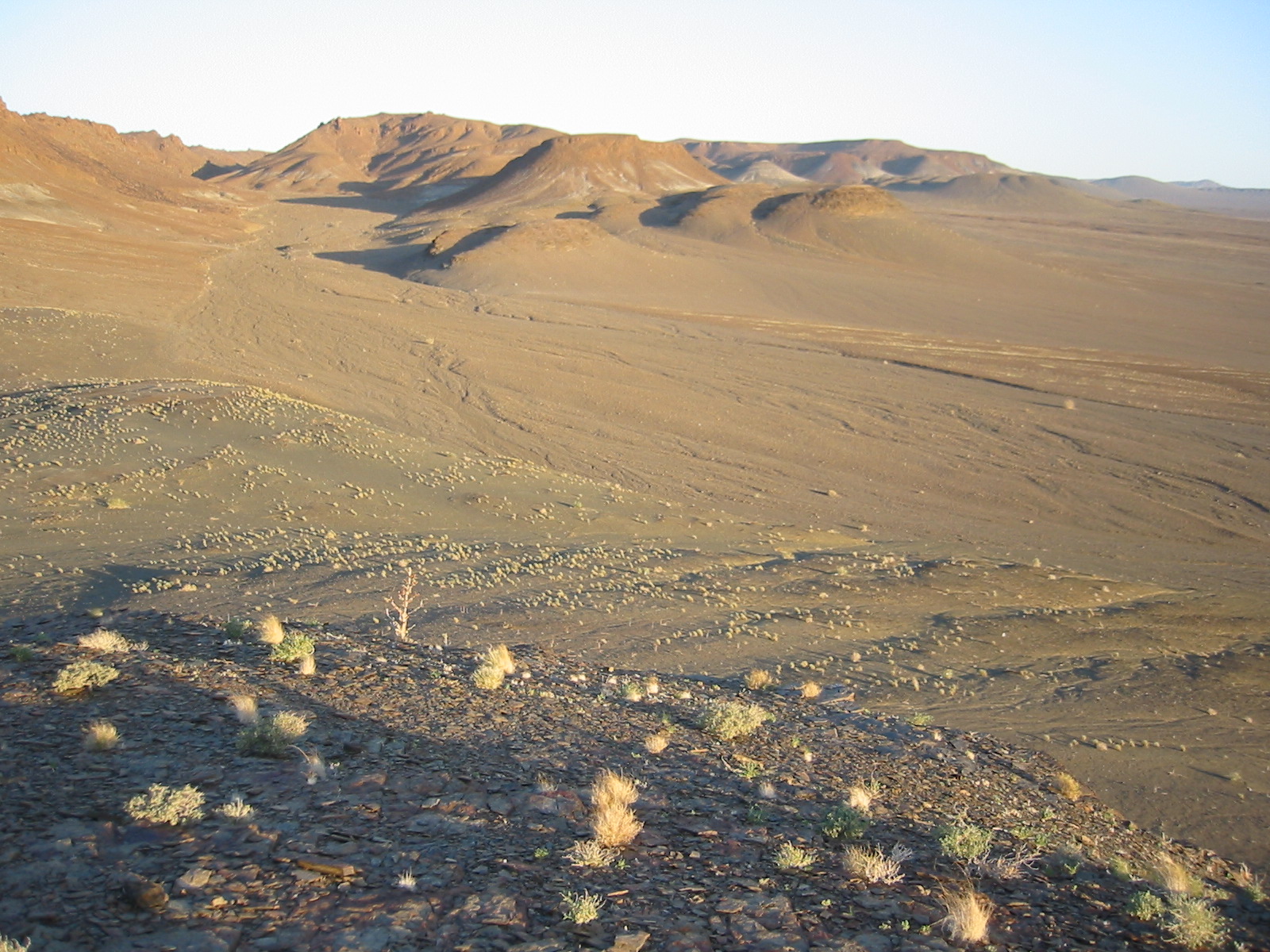
The Great American Desert

[I wrote this piece a few years ago, but the History Channel's recent broadcast of Black Blizzard, along with Tim Egan's narrative and interviews with Dust Bowl survivors, makes it worth repeating.]


"When the native sod of the Great Plains was in place, it did not matter if people looked twice at a piece of ground. Wind blew twenty, thirty, forty miles an hour, as always. Droughts came and went. Prairie fires, many of them started deliberately by Indians or cowboys trying to scare nesters off, took a great gulp of grass in a few days. Hailstorms pounded the land. Blue northers froze it so hard it was like broken glass to walk on. Through all of the seasonal tempests, man was inconsequential. As long as the weave of grass was stitched to the land, the prairie would flourish in dry years and wet. The grass could look brown and dead, but beneath the surface, the roots held the soil in place; it was alive and dormant.
The short grass, buffalo and blue grama, had evolved as the perfect fit for the sandy loam of the arid zone. It could hold moisture a foot or more below ground level even during summer droughts, when hot winds robbed the surface of all water-bearing life. In turn, the grass nurtured pin-tailed grouse, prairie chickens, cranes, jackrabbits, snakes, and other creatures that got their water from foraging on the native turf. Through the driest years, the web of life held. When a farmer tore out the sod and then walked away, leaving the land naked, however, that barren patch posed a threat to neighbors. It could not revert to grass, because the roots were gone. It was empty, dead, and transient."


—Timothy Egan, The Worst Hard Time: The Untold Story of Those Who Survived the Great American Dust Bowl

Read this book.

May 15, 2009

Who's Blooming Today: Romneya coulteri

One of my absolute favorite California native plants, Romneya coulteri or Matilija poppy, began throwing out its huge fried-egg blooms a couple of days ago. At 7' tall and even wider in just its second year with me, this perennial is too large for many gardens (including mine, but that hasn't deterred me). And unfortunately, it resents being transplanted, and is notoriously difficult to propagate — as a native of the fire-prone chapparal, the seeds usually won't germinate unless something like pine needles is burned on top of them. Fortunately, Romneya can be found fairly readily at nursery. Just know that if you're shopping in the fall or winter, you'll probably find just a small pot of dead sticks... the dormant plant gives no clue of just how massive it will become.

Mar 3, 2009

I Hate Being Right About This


Rain or no rain, it's officially a drought emergency. I hate being right about things like this.

So: are you ready to cut your water consumption by 20%? Even before you kill your lawn, schedule a house call: water agencies in San Francisco, the East Bay, Redwood City, and most* of Santa Clara County offer free basic inspections that calculate water usage and point out opportunities for conservation both indoors and out. Santa Clara Valley Water District also is hosting a "Water Efficient Landscaping Workshop Series" including one of my favorite local designers, Alrie Middlebrook.

*California Water Service doesn't offer house calls, but does offer free fixtures and other resources for their customers in Los Altos, Los Altos HIlls, Menlo Park, Cupertino, Sunnyvale, San Carlos, San Mateo and South San Francisco.

And if you want to get an in-depth analysis of your landscape water use, contact a certified irrigation contractor, who will put your system through its paces and really optimize it according to detailed, standardized guidelines.

The prospect of reducing our water use by 1/5 is about as cheering as the stock market these days. But if you've been considering changing up your landscape, this is an opportunity to do it right — and perhaps even get paid for it! With a little professional advice, you can wind up with a yard that is easy on the eyes, easy on the wallet, and easy on the earth as well.

May 28, 2008

4 Degrees of Separation

What a difference four degrees makes.

That's the difference in latitude between my office in Palo Alto, Calif. (37.4 degrees, just south of San Francisco) and my current vacation spot in Carlsbad, Calif. (33.1 degrees, just north of San Diego).

Up north, we can't grow Jacaranda mimosifolia very successfully due to our typically frosty and occasionally freezing winters. Down here, the tree's vibrant lavender blooms are pretty much ubiquitous this time of year.

Up north, our soil is heavily influenced by at least four local ancient volcanoes — mounts Diablo, Hamilton, Tamalpais and Sonoma — with a resultant fertility that made today's Silicon Valley the original "Valley of Heart's Delight." Down here, with the nearest volcanoes some 4–5 hours away, the local soils are much more estuarine, sandy and lacking the minerals and clays that nourish "exotic" plants.

Up north, Palo Alto averages about 15" of rain annually, contributing to a mostly foothill woodland native plant habitat bordering on evergreen forest. Down here, Carlsbad averages about 7" of rain annually, creating a predominantly coastal sage scrub community.

Up north, our average summertime high temperature is above 78° Fahrenheit. Down here, the average summertime high temp is just under 74°F. However, thanks to the famous San Francisco fog, at night we can drop 22°F — while closer to the equator, Carlsbad drops only 10°F.

Obviously there are pros and cons to each latitude, but you can see how just a few degrees of separation can significantly affect environments and lifestyles. Where would you rather live? And if prognostications of global warming expanding the equatorial zones are correct, and Palo Alto comes to resemble Carlsbad and Carlsbad comes to resemble Puerto Lobos, how would your lifestyle change?

May 21, 2008

Never Do This To Your Tree

The interface between "developed" spaces and "protected" ones is an increasingly hot topic. Lots of properties around here abut open space harboring coast live oak (Quercus agrifolia) trees; I recently came across one of these California natives living on county land just across someone's property line, and growing at such a tilt to push against the residential wall that post-dates it by probably 20 years.

Now, these trees are only slightly more precious than gold around here, and this tree in particular is under county care; so in such a case usually the wall would be sacrificed to the cause. However, in this case someone has decided to adjust the tree instead. But by cutting through the protective bark and into the cambium and even heartwood of the tree, they've severely interrupted the flow of water and nutrients from the roots up the trunk to the foliage. And this is major surgery: deep and rough cuts which are unlikely to heal well (if the tree can muster the energy to heal them at all before it dies).

I'm sure I gasped audibly when I saw this, and the homeowner was equally shocked to learn about it. No one seems to know who made the cut, or when, although it certainly looks fresh. Trees are remarkably resilient, with the ability to compartmentalize wounds and adapt to adversity. But with about one third of this tree's vascular system removed, I would guess it has a very, very poor prognosis indeed.

Apr 27, 2008

Love Thy Neighbor

Especially when you're trying to increase your home's curb appeal, it pays to pay some attention to what's happening next door. Let's consider some of our typical neighbors, and how you might take a cue from them:

  • The Yawner Lawner. A square of grass, a few annual flowers, a couple of shrubs anchoring the front entryway… woo hoo, party time in suburbia. You have a couple of choices here: match your neighbor's lawn right up to the property line and co-host the neighborhood Thanksgiving football game; or show off your good taste with a stylish yet sensible mix of evergreen and deciduous shrubs that — unlike that slab of green next door — shift colors and shapes to show off a different asset every season of the year.

  • The Fortress. Whether it's a fence or a wall, this one makes a clear statement: "Keep Out." Assuming you're not interested in consolidating your properties into a compound, your best strategy may be to be as open as your neighbor is closed. If you must have screening, try a split-rail wood fence; or better still, use only softscape (plants), perhaps a loose hedge clipped low — Cornus alba has nice winter interest even when the leaves fall — with a structural feature such as a freestanding arbor to actually invite your guests up the front walk, not stop them short at the sidewalk.

  • The Palace. Its tiered fountains, Baroque statuary, and manicured boxwood attempt to recreate Versailles — albeit on a slightly smaller scale. Just what point the homeowner is striving to make may be a mystery, but your counterpoint can be more clear: simplify. Be authentic. Go native, even. Just as Versailles was designed to celebrate man's mastery over nature, your garden can celebrate the uncertainty, the maddening unpredictability, of a natural system. Sure, the very idea makes you nervous. But with a little professional help you'll pull it off, and your front yard — not your neighbor's — will be the talk of the block.

    There are other neighbors we could analyze: The Museum. The Orchard. The Junkyard. (Although if you live next door to Great Dixter… well, there's really no point in doing much more than setting up a lemonade stand.) The point is, whether you want to distinguish your home to raise your property value or just to make it yours, sometimes the nearest inspiration lives next door.

    Who lives next door to you?
  • Apr 12, 2008

    Green Building Comes Home

    If you're planning a construction project here in Palo Alto later this year, odds are you're going to be held to a higher standard than ever. As reported in the Palo Alto Weekly, a proposed building ordinance will require that residential construction ultimately comply with the "GreenPoint Rated" checklist developed by California's Build It Green initiative; and that commercial projects meet national LEED standards.

    On the home front, here are some of the items Build It Green includes on their landscaping checklist:
  • Construct Resource-Efficient Landscapes
  • Use Fire-Safe Landscaping Techniques
  • Minimize Turf Areas
  • Plant Shade Trees
  • Group Plants by Water Needs (Hydrozoning)
  • Install High-Efficiency Irrigation Systems
  • Add Compost to Promote Healthy Topsoil
  • Mulch All Planting Beds
  • Use Salvaged or Recycled-Content Materials for Landscape Elements
  • Reduce Light Pollution
  • Collect and Retain Rainwater for Irrigation

    The proposed ordinance is likely to take effect in July, with a phased implementation (e.g. home builders will only have to earn 75% of the necessary points within the first two years) to allow time to master the new requirements. But whether you're a local homeowner, a builder or a contractor working in Palo Alto, the political landscape is about to dictate major changes to your project's landscaping. If you have questions about what's ahead, I'd be happy to be your local green guide.
  • Apr 11, 2008

    Seriously? The Worst Tree Ever?!

    OK, I admit I was having some fun with my April 1 post. But Jane over at Garden Design Online alerted us to a feud (in my own community, no less! what kind of investigative journalist am I, anyway?!) (oh, yeah, I'm not) that really does demonize the venerable redwood: Basically, as reported back in February in the Los Angeles Times and more recently in the New York Times, a half-dozen existing redwoods are shading a neighbor's new solar panels and therefore running afoul of a 1978 state law.

    Our local state senator, Joe Simitian, has introduced a bill to inject a little sanity into the issue; the bill would give existing trees legal precedence and priority over more-recently added solar panels.

    Now if someone would only do something about those damn poppies.

    Apr 1, 2008

    The Worst Tree Ever

    You know that beautiful, majestic, mature redwood tree in your neighborhood — maybe even in your yard? The one that's the pride of your community?

    Kill it.
    Cut it down.
    Do it now.

    "What?!" He's gone mad, you're saying. There's no — how could — what??!!

    But the disturbing fact is, a grown redwood sucks up more water each and every day — 500 gallons or more! — than any other garden plant, including the oft-demonized lawn. Even the most water-unthrifty among us, spraying the lawn (and sidewalk and gutter) 10 minutes every day at 25 gallons per minute, might spend 250 gallons a day… but not 500 per plant.

    And that's not even to mention that redwoods, like wolves, are hardly solitary creatures. They grow in groves, and if you've ever been to Muir Woods, you've seen it: as soon as one tree dies, a "fairy ring" sprouts up around its base. One down, five take its place. So now instead of 500 gallons per day, we're talking 2500 gallons. Do you want that water bill? I don't.

    Will your garden be next?But it's not just water. The fairy ring is a perfect example: is there any better definition of a noxious weed? I mean, we curse the fluorescent yellow oxalis this time of year, but in a few months it's gone. We lament the smothering of our native hillsides by scraggly Scotch broom, but at least we can still see the hillside. A fairy ring gets going in your next door neighbor's lot, you may as well get yourself an old Underwood and start composing manifestos.

    Plus, redwoods create fire danger. Their copious duff and bark are rich in tannins, which suppress not only weeds but also fire, which would be all well and good except that, as the wise people in our government who are paid to think these things all the way through know, the West's wildfires are becoming more catastrophic because there are fewer small fires occurring, so that when a fire does get going, it's got more and larger trees (i.e. more fuel) and spirals out of control much faster.

    El Palo not-so-Alto-anymore
    Quite honestly, redwoods are such a menace it's difficult to understand why they're the state tree of otherwise enlightened California — or why my own fair city not only hasn't cut down its decrepit namesake and renamed itself South Menlo or Steve's Town or something actually worthy of its citizenry, but actually has accorded these monsters "heritage tree" status; and so protected, they'll continue to grow and consume even more water — leaving even less available for the rest of us in these near-drought times.

    Look: I appreciate the spirit of well-meaning groups like Save The Redwoods and Sierra Club and The Nature Conservancy, who valiantly endeavor to preserve the few remaining places that are so pristine it's almost a transcendent experience to visit. It just breaks my heart they so willingly ignore no less than Time magazine's reporting that "redwoods create their own microclimate" (which explains why gardening around them is an ambitious affair at best) to lionize the legendary Sequoia as if its utter domination of the landscape is somehow a good thing. "Drippy, dark and closed in," says one of California's foremost native plantsmen of a Sequoia habitat. "Cut the forest down and you usually get Northern Coastal Scrub."

    Sequoia-free = tabula rasaThe irony is that once a redwood is removed, instantly it becomes apparent how much light and air are available to the gardener and the garden. Roses can grow where only ferns dared try; moss and musty odors disappear overnight; our dream of a water-wise garden actually has a chance of becoming a reality.

    Still want a tree in that spot? Now you're free to choose. Plant a mighty oak! (Uh, well, except that oaks can drink 250 gallons a day and still become overbearing monstrosities that can never be cut down. Nevermind.) OK, plant a… willow! Or a birch! (Um, wait, those are both riparian species, so they'll suck up all your water and invade your sewer line.) A jacaranda, then! (Actually, it gets a little cold here for those to really thrive.) Jeez, a magnolia! (Yeaahhhhhh… despite their ubiquity, they actually heave hardscape like crazy and look pretty bad without constant moisture and humidity. Not a good choice for our summers.)

    Look, what's wrong with you?! Why are you so hung up on specifics?! Once that damn redwood is gone, you can do whatever you want! Okay, I'll take the initiative: so that we can write the last chapter of this nightmare, I'll personally contact every city council on the peninsula, as well as the California EPA, and implore them to rescind the redwoods' heritage tree status.

    Just… not today.

    Mar 29, 2008

    Native Plant Sales Next Month

    Mark your calendar… it's time to start loading up on California native plants from the folks who know 'em and grow 'em.

    I keep a current schedule of sales on our main site. If you need a nudge to understand why growing natives makes sense in any garden, start with the California Native Plant Society. There's also the Going Native Garden Tour, on April 20. And of course, these books are always worth reading… or re-reading:


    Complete Garden Guide to Native Shrubs of California (1990) by Glenn Keator

    Complete Garden Guide to the Native Perennials of California (1990) by Glenn Keator

    Growing Native, a collection of guide books by Louise Lacey, P.O. Box 489, Berkeley, CA 94701, www.growingnative.com, (510) 232-9865.

    Dec 15, 2007

    Pardon the Interruption

    Where the hell have I been for the last two months?! Let's just say this has been one of the busiest autumns I've ever had, and unfortunately doing the work to my usual exacting standards has taken precedence over musing about it. But I've still had a lot on my mind. For starters:

    I'm proud to announce Verdance now offers design modeling as one of our premium services. In the last two years I've transitioned from hand-drawn plans to the enhanced precision and visualization of CAD and SketchUp-rendered designs. Now, I'm also able to replicate our designs to scale, whether to show the look and feel of an entire site or create a prototype of a specific feature. Of course I offer this service to my clientele; and I'm available as well to consult for other landscape designers and architects in bringing their design ideas to life.

    Back in the virtual world, my series on Christmas trees, real or fake or organic or toxic, is due for a new chapter; the G Living Network was kind enough to do the heavy lifting for me.

    After ordering about 1,000 narcissus and tulip species from Brent and Becky's, I've been hurriedly preparing my front yard to receive them and ultimately have concluded I'll have to plant them in shallow graves and unearth them for a proper replanting next fall. That's efficient.

    The time for getting native plants into the ground has come and is going... and have I gotten my own vernal pool (aka billabong) prepared? Nooooo..... but I will at least have some "in process" photos here soon.

    I've certainly missed having the time to write here; of course there's also some wondering whether anyone is reading (or not reading) what I do write. If there's anything you'd like to hear me wax on about in the coming months, I hope you'll let me know.

    Oct 18, 2007

    When It Rains...

    ...The ground gets wet
    ...The plants get happy
    ...I get featured in the media

    Tune in to HGTV this Sunday, 10/21, at 9:30 a.m. to see yours truly on my first episode of "Landscapers' Challenge". Did I pop the champagne corks in victory? Did I cry all the way home in defeat? You'll just have to tune in to see.

    What I can tell you is, the yard recently (although too late for filming) was named an official Certified Wildlife Habitat™ by the National Wildlife Federation, because it nourishes and shelters birds, butterflies, and other desirable species. This is a neat program because it encourages designers and homeowners to think beyond just how a yard looks and consider what it does. So I can take comfort knowing that this yard will still be helping its environment long after my ephemeral fame has dried up like yesterday's rain.

    Jul 30, 2007

    A Tree Grows At Stanford


    We all know Stanford University is the pinnacle of knowledge west of the Atlantic Ocean. But while we might expect binary trees, expression trees and one particularly silly mascot, did you know the University's founder also planned a great arboretum that would be a veritable "zoo for trees," taking advantage of the region's moderate climate to grow rare and notable species from every corner of the globe?

    Unfortunately, what remains in the original arboretum space planned by Frederick Law Olmsted are mostly eucalyptus and oak species as well as the palms on eponymous Palm Drive and elsewhere. The oaks are native, explicitly protected by Senator Stanford; the eucalypts were planted as fast-growing "nurse trees" to offer shade to tender exotic transplants while they established, then be removed.

    As the Stanford News Service reports, in the financial crisis following the Senator's untimely death "the arboretum was neglected. Most specimen trees failed, while the heartier eucalypts flourished." When backers revived plans for the arboretum, they "upheld Stanford's vision for maintaining wooded open space, but departed from his notion of trees from around the world in favor of species native to California."

    Nevertheless, today Stanford hosts a remarkable diversity of not only trees but also shrubs, vines, grasses and native plants, catalogued and annotated online in a tremendous resource. Horticultural notes, leaf silhouettes, tree walk maps, and more await you. Whether or not you've seen it on campus, this is a quick and gorgeous go-to guide for identifying, or selecting, that perfect specimen.

    Mar 21, 2007

    Seeing Checkerspots


    If you've read my work over at Yelp, you know I'm a fan of Edgewood Park & Natural Preserve. And today there's great news for the park and its friends: as reported by the San Mateo Daily Journal, "The checkerspot butterfly is flying back from the brink of extinction and making its home once again in Edgewood Park — a decade after it disappeared from the San Mateo County natural preserve."

    Part of the reason I'm so excited over something so small is that the return of this native species is due pretty much entirely to the efforts of volunteers, who spent years removing invasive ryegrass and other weeds and replacing them with native plants the checkerspot needs for food. That people can — and would — change the world without the motivation of money gives me hope.

    Again — am I beating this drum too much? — here is an illustration of the importance of native plants. In our case, the checkerspot mommies lay their eggs on California plantain, an unassuming little thing notable for two reasons: one, it is a primary food for checkerspot larvae; and two, it has adapted to the austere, even toxic, soil created by serpentine stone — with which Edgewood Park is rife. When the ryegrass moved in, it forced the plantain out… and the butterflies followed.

    You'll find the long story of the checkerspot, and plant species that tolerate serpentine, elsewhere. But for now, take advantage of these beautiful days and go butterfly watching! I know just the place…

    Mar 14, 2007

    Taking Charge


    Over at The Daily Dirt, Heleigh Bostwick advises gardeners that one way to get native plant species into your garden is to "take charge of your landscape. Instead of letting the contractor or designer decide which plants use, you be the one to decide what gets planted. Taking charge can be as simple as asking whether a plant is native or exotic and opting for the native plant, or as complex as researching and compiling your own list of native plants for the landscape designer or contractor to use."

    Granted, I've got a bit of a bias here. But with all due respect, the whole reason to hire a designer is because our expertise and experience allows us to develop the plant palette that is uniquely suited to your unique wishes and site conditions. If the average homeowner just went to the nursery and grabbed a bunch of native plants because they're native, well, I doubt the results will be spectacular. Will your soil support a native community? Are the plants you've selected even members of the same community? As I've mentioned before, natives are native because they've evolved to a very specific set of conditions. Woe to the gardener who tries combining a Fremontodendron with a Sisyrinchium.

    Heleigh is right: taking charge of creating the plant list is one solution. But it's not the best one. The best solution is to interview landscape designers (or contractors) extensively. Get references to projects that are comparable to yours. Ask to view sites first-hand. If you're afraid they might just be recycling the same plant palette over and over again, ask whether they have a "favorite set of plants" they like to use -- any answer other than "it depends on your unique situation" probably is not a good answer. If natives are important to you, make that one of your defining criteria for hiring a professional. But do hire a professional.

    Sometimes the best way to take charge is to delegate.

    Mar 7, 2007

    Native Plant Sales this Spring

    Mark your calendars… it's time to start loading up on California native plants from the folks who know 'em and grow 'em.

    I keep a current schedule of sales on our main site. If you need a nudge to understand why growing natives makes sense in any garden, start with the California Native Plant Society. And of course, these books are always worth reading… or re-reading:


    Complete Garden Guide to Native Shrubs of California (1990) by Glenn Keator

    Complete Garden Guide to the Native Perennials of California (1990) by Glenn Keator

    Growing Native, a bi-monthly newsletter by Louise Lacey, P.O. Box 489, Berkeley, CA 94701, www.growingnative.com, (510) 232-9865.

    Feb 6, 2007

    "If you can't control it, don't plant it."


    That's the advice from Backyard Invasion, a new exhibit at the Carnegie Museum of Natural History in Pittsburgh, featuring images of invasive and endangered Pennsylvania plants.

    Pittsburgh is a little out of my way this week, but here are some key points that are worth sharing no matter where you garden:

  • Non-native plants — also known as “exotic” plants — can be classified as “invasive” when they exhibit rapid and aggressive growth. Around here, that would be the Cytisus scoparius (Scotch broom) and Cortaderia sellowiana (pampas grass) that blanket our hillsides each spring and fall, respectively. (I find it particularly ironic that the Scotch broom is in full flower all around the Cow Palace just when the San Francisco Flower & Garden Show is on.)

  • When they take over a garden, park, or planting area, invasive plants endanger the surrounding ecosystem. Obviously, if a weedy species such as pampas grass is consuming a site's water and nutrients, and producing shade, other plants can't thrive there. But it's not just the plants that are forced out: along with them go propagators such as birds, bees, and butterflies; mycorrhizal fungi, lichens, and other symbiotic microbes; and macro- and micro-nutrients that otherwise would support a diversity of flora. And, nature being nature, there's a whole chain of parasites, predators, relatives and beneficiaries that follow all of these out of the ecosystem.

  • The invasive plants are likely to encroach upon regions previously occupied by native plants, many of which are rare, if not at risk for extinction. One reason may be because, while native plants have evolved very particularly to the conditions of their locale—e.g. serpentine soils—invasives will grow damn near anywhere. The second fold of this problem is that, because of their specific adaptations, natives have very few places to naturally relocate once displaced. If you're growing native plants in your garden, weed often and thoroughly: your native micro-habitat is vulnerable to the invading hordes.

  • Able to adapt quickly to new environments and produce seeds in short cycles, invasive plants can be extremely hard to eliminate. Any removal effort is certain to cost money as well as time. Again, a strong case for early detection and treatment (and why it's not so easy to just dispatch throngs of highway workers to machete the Cortaderia and Cytisus into submission).

    Because they create such high-maintenance headaches, it's a lot easier to just look the other way when invasive weeds start sprouting. But if they're left unchecked, entropy dictates we will become a planet of weeds. To learn more about the invasives threatening California, check out Encycloweedia, as useful as it is cleverly named. And make sure you, or your garden designer, really knows what's going into your garden—before that cute little "Tree of Heaven" becomes the noxious weed from hell.
  • Jan 17, 2007

    What's Next?

    According to a recent ASLA study:

    "Home owners will be adding firepits and fireplaces for outdoor entertaining in 2007. And they, along with commercial building owners, will be paying a lot more attention to environmentally-friendly landscape options, such as adding native plants and managing stormwater more effectively, according to a new survey of ASLA award recipients from recent years.

    "The informal survey conducted in December, identified the most popular requests from homeowners and commercial clients for 2007. For homeowners, firepits and outdoor fireplaces top the list. Also popular are requests for sustainable solutions, such as using native plants that require less watering and maintenance.

    "Homeowners are requesting landscape architects design complete outdoor rooms, such as kitchens and bars, for entertaining. Water features such as koi ponds, pools, and fountains continue to be popular. Incorporating rain gardens and green roofs in home landscapes will add a different – and more sustainable - flavor to 2007 homes.

    Steve Martino, FASLA, of Phoenix—recipient of both the ASLA Design Medal and the ASLA Residential Design Award of Excellence in 2006—cites private living spaces, outdoor rooms, and water features as top homeowner requests. He also says that clients are coming to him for 'green solutions' for their homes."


    For my part, I find it interesting that the same folks who want "sustainable" solutions also want environmentally un-friendly features such as fireplaces and firepits. After all, wood-burning fires contribute to air pollution and greenhouse gases that accelerate global warming; and gas-burning fireplaces deplete natural resources as well. I'm one to talk: I've included firepits in designs, and plan to build a fireplace for my own back yard. I suspect the greater issue here is of people (landscape architects included) not really understanding what "sustainability" really means. I'll explore this idea and offer a few resources in future posts.

    Dec 14, 2006

    The Great American Desert

    "When the native sod of the Great Plains was in place, it did not matter if people looked twice at a piece of ground. Wind blew twenty, thirty, forty miles an hour, as always. Droughts came and went. Prairie fires, many of them started deliberately by Indians or cowboys trying to scare nesters off, took a great gulp of grass in a few days. Hailstorms pounded the land. Blue northers froze it so hard it was like broken glass to walk on. Through all of the seasonal tempests, man was inconsequential. As long as the weave of grass was stitched to the land, the prairie would flourish in dry years and wet. The grass could look brown and dead, but beneath the surface, the roots held the soil in place; it was alive and dormant. The short grass, buffalo and blue grama, had evolved as the perfect fit for the sandy loam of the arid zone. It could hold moisture a foot or more below ground level even during summer droughts, when hot winds robbed the surface of all water-bearing life. In turn, the grass nurtured pin-tailed grouse, prairie chickens, cranes, jackrabbits, snakes, and other creatures that got their water from foraging on the native turf. Through the driest years, the web of life held. When a farmer tore out the sod and then walked away, leaving the land naked, however, that barren patch posed a threat to neighbors. It could not revert to grass, because the roots were gone. It was empty, dead, and transient."

    —Timothy Egan, The Worst Hard Time: The Untold Story of Those Who Survived the Great American Dust Bowl

    Read this book.

    Oct 31, 2006

    Thinking Green

    I love a good idea. I don't care where it comes from: me, you, other designers, the janitor. I'll gladly stand on the shoulders of people smarter than I am—which is a nice way of saying I'll steal their ideas. But I'll at least give them credit.

    So in that spirit, here is longtime sustainability advocate Arlie Middlebrook's contribution to our lively, and necessary, conversation about global warming. I've highlighted the ideas that I find particularly insightful, but the insights (and words) are hers:

    "THIRTEEN WAYS TO STOP GLOBAL WARMING
    "Save Water and Have a Beautiful Natural Garden


    "1. Plant a California native garden utilizing plants that naturally occur at your site. Native plants thrive where they have evolved and are accustomed to, it can survive on annual rainfall. The establishment period is 2 years.

    "2. Protect your watershed. The less impervious surface you retain on your property, the more rainfall will stay on your property. When you create a garden, try to retain all of your rainfall on your property. If you have concrete on site, renew, reuse or recycle it in creative ways, such as breaking it up and re-laying it for a porous driveway or patio, stacking it for raised beds or planters, staining it and re-laying. It as attractive stepping stones or recycling it for future use by others. City recycling centers will accept your broken concrete: http://www.sjrecycles.org/business/cddd-certified-facilities.htm

    "These facilities will let you pick up recycled concrete as well.

    "3. Don’t use new concrete in garden construction. After the burning of fossil fuels, the manufacture of cement is the number two contributor to greenhouse gas emissions. If you must use concrete, limit its use and request that ‘fly ash’ be used as an additive, or use porous concrete. Fly ash is a byproduct of burning coal and in addition to being a filler actually improves the concrete. Ask your contractor to add it to the mix. http://www.flyash.com/flyashenvironment.asp

    "Porous concrete is comprised of pea gravel and concrete. Water drains through it. Several local concrete companies now supply porous or ‘pervious’ concrete, e.g. http://centralconcrete.com/pervious_concrete.html

    "4. If you must irrigate, do not use spray/sprinkler systems. A sizable amount of the water is lost to evaporation. Use drip, soaker, bubbler, microspray or an underground irrigation system. The one exception is using overhead spray to establish a native bunch grass/wildflower meadow during the establishment period.

    "5. Lose your Lawn! Up to 60% of household water is used on lawns. And throw away your lawn mower. Two cycle engines are the most polluting engines in America. Replace your lawn with a native meadow, native ground cover or a turf substitute. FieldTurf makes a replicated grass product that looks just like grass and has a natural feel, yet is manufactured from recycled plastic and ground up recycled tennis shoes. It is guaranteed for 15 years. http://www.fieldturf.com/product/nikeGrind.cfm

    "6. Don’t use oil-derived pesticides, insecticides, herbicides or fertilizers. Compost and keep worm bins. Break the chemical dependence cycle. If it has the word “kill” on the package, be very wary of buying it. Your soil is alive and these chemicals can kill your soil (yes, even the fertilizers). Iron-based slug killer and safer ‘organic’ pesticides on the market including pyrethrins, essential oils and soaps may work more slowly, but you will come out ahead in the end. Reminder: All pesticides should be handled with care. Read labels carefully.

    "7. Register your garden as a certified national wildlife habitat. (National Wildlife Federation http://www.nwf.org/backyardwildlifehabitat/createhabitat.cfm). Encourage children to visit your garden. Create places for frogs, birds, butterflies, toads and lizards. Create a small water feature. Leave detritus for animal cover and protection. Be a part of educating the next generation to feel connected to Mother Earth and learning the responsibilities of protecting Her.

    "8. Use solar power to operate fountains, gates, lighting and power in garden sheds and cottages.

    "9. Grow some of your own food organically. Plant fruit trees and vegetables as landscaping plants. If you can’t harvest your food, contribute it to those who need it. Work with local non-profit harvesting agencies such as Village Harvest: http://www.villageharvest.org/

    "10. Use recycled material and products and certified sustainable products in garden construction. Trex, for example, is made primarily with recycled plastic grocery bags, reclaimed pallet wrap and waste wood. Beware: not all composite woods use recycled products. Use ‘Forest Council Certified’ wood and other recycled materials existing on site. Check http://www.RecycleWorks.org for materials you need.

    "11. Buy from local suppliers. Limit your driving. Order materials online. Have materials delivered to your site.

    "12. Use tree trimmings for mulch or recycled products like Pro-Chip, which is produced from curbside recycled garden waste. Apply generously to a depth of three inches minimum. It keeps your soil moist, reducing the need for irrigation. Many local tree service companies will give you mulch for free. Pro-Chip is available at local landscape supply companies, like South Bay Materials, as well as from BFI http://www.interquix.com/organics/decmul.htm

    "13. Use weed cloth under mulch. This will allow the native plants to become established by repressing invasive weeds that can sneak through mulch. Four hours of weeding in the sun will having you wishing you had used weed cloth. Install it from the start and smile every time you walk by your weed-free garden beds."

    I know I've already touched on some of these issues in previous posts, but Arlie's words are a good reminder. Do the right thing. Do it in small doses. And before you know it, you will be the change we need to see in this world.