Showing posts with label home value. Show all posts

Sep 17, 2009

What's A Tree Worth?

Yesterday the city of Palo Alto completed its removal of some 50 trees, mostly holly oak (Quercus ilex), from sidewalks and medians on California Avenue. This is the first phase of an urban facelift that promises additional pedestrian-friendly features such as crosswalks, benches, and new red maple (Acer rubrum) shade trees.

It's a bit disturbing, especially for someone in my business, to witness the clear-cutting of an entire business district. And the barren streetscape is particularly shocking for anyone who hasn't been there since, oh, Monday. But what seems to be most upsetting for people is the fact that, for most of us, this was an utter surprise.

My studio is located on Cal Ave, and I can attest that the city did reach out with mailers advertising public meetings and soliciting comment. But none of us was told that the project was moving forward, nor given a timetable. When I called Public Works on Tuesday (when the tree removal began), I was told only that "it's part of a remodel for the street." No proposed plans on file, no renderings to review.

As Jeff Gatlin of the Daily Post reports (sorry, no link, they think "giving away news online is a dumb way to do business"), reactions on my street range from resigned to furious. The owner of Leaf and Petal thinks the removals should have been done "in increments like a fifth at a time". The manager of Szechuan Cafe thinks "it was a bad idea to cut trees that were here for 30 years." Next door, excellent Mexican restaurant Palo Alto Sol lost a huge tree that shaded several of its tables; owner Hector Sol was as hot as his salsa rojo, saying "Whoever did this is an idiot… now customers refuse to sit where they used to ask to be seated."

For what it's worth, I feel that (1) all the trees should have been taken out, and replaced, at one time — a patchwork of old and new would have looked particularly odd; (2) the deciduous, colorful red maples will be an improvement over the evergreen, dark holly oaks; and (3) Hector's food really is excellent.

But there's a lesson in here about the emotional attachments people form with their landscapes.

For better or worse, we were used to the holly oaks. Sure, their deluge of acorns made walking a bit treacherous each fall. Sure, they misted sap onto cars, people and bikes each spring, Sure, they were massive and not particularly pretty. But they were "ours," they shaded us while we sat and dined and socialized, they added a vertical dimension to a low-slung avenue, they softened the aging concrete facades. We loved those old trees — we just didn't know it until they vanished.

Twenty years from now, we will have the same attachment to the red maples. I can only hope that, if future planners decide to remove those, they will have learned that we all would appreciate a little more time to prepare our hearts for the loss.

Jun 29, 2009

Your Backyard Vacation

Last week I met with a client whose landscaping was recently completed. As we sat poolside in the shade of an umbrella, he told me, "this is my favorite place in the world. I just step outside and I'm on vacation." Who was I to disagree?

Even if we're not attempting to recreate Bali in our backyard, don't we landscape in hopes of making a destination for ourselves, a getaway that's more "get" than "away"? I've got kids to adore, I've got a business to run, I don't have the time or the money to hop on a plane to visit a better life. Even on the hottest days, the thought of driving to the beach gives me pause: who wants to pack, schlep, do battle with the general public on crowded freeways and busy beaches, finally arriving just in time to turn around?

But when I can step outside my back door and be transported to another place or time, now that's luxury.

When I can't wait to sit poolside in the shade of an umbrella… when my favorite childhood memories return, prompted by a scent… when I feel my pulse slow, watching clouds at sunset… I have the luxury of truly relaxing. When the fragrance of star jasmine wafts into my bedroom at night… when I can invite friends over and grill an amazing, impromptu meal in my outdoor kitchen… when the butterflies waft around my face while I enjoy a cup of coffee in the morning sun… then I've got not just a yard, but a destination.

Best of all, it's not just one destination, it's several. It's a space for my alone time. It's a space for my children and me to play. It's a space to indulge my senses, and a space to retreat to when my senses are on overload. It changes with the seasons, delighting me with surprises even as it soothes me with its predictable constants.

There are practical aspects, too. Every dollar that I invest in my yard is a dollar I don't need to spend on airfare, or room tariffs, or waitstaff gratuities. My travel time is zero. No jet lag, no language barrier, no cultural adjustments needed. Also, no chance of sellouts, blackouts, overbookings or lost reservations. In my garden, I am always welcome.

We think of a resort vacation as an indulgence. Yet the most indulgent act of all might be staying home, and taking a holiday in our very own backyard.

May 27, 2009

Our Services are No Longer Needed


…sigh…

Apparently, I'm obsolete. Not as in outdated; just as in, well, redundant.

It's a shame, really, This was going to be a good career. It seemed to have everything I wanted: the chance to create beauty, inspire people, help the planet, soak in a little sun and learn a little Latin.

Sure, I wasn't going to get rich at it. But affording the mortgage by drawing pretty pictures and tromping through plant nurseries? Priceless.

Unfortunately, my secret got out: any blockhead can do what I do. You don't need a degree (never have), you don't need a license. Used to be, for the price of a stack of books you could know almost as much as the experts; now, it's even cheaper than that.

What changed?

The Internet, that's what. Now, without ever leaving the comfort of your couch, you can access primo gardening and landscape design information, from some of the best names out there:
  • Bettter Homes & Gardens
  • Sunset
  • HGTV
  • Fine Gardening
  • About.com

  • OK, so maybe that last one's a little weak. But seriously: how can I compete with Sunset, BH&G, Fine Gardening?! They wrote the book (literally) on what I do. And now, they're offering their decades of experience online, for free. How can I possibly justify charging thousands of dollars for that?

    …sigh…

    Although… I suppose… there is one thing they're not doing. They can tell you how to build a pergola; but they can't tell you what the ideal orientation of that pergola is for your site, or what dimensions would suit your home's architecture the best, or for that matter whether a pergola is the best choice for you in the first place. Hey, that's something, right?

    And, come to think of it, while they can tell you how to find the perfect plants for your yard, they're relying on your interpretations of things like "partial" sun and "moderate" water, not to mention soil texture and fertility, microclimate, or local plant communities. I could help with that!

    For that matter, they can tell you about the coolest varieties of the best species; but they can't tell you whether those varieties really are appropriate for your yard, or where to find them if not at the local nursery. Actually, I'm really good at that!

    Do you know what this means? This could be good news! Not only am I really well-suited to help someone design a garden that's customized for their own unique lifestyle and their own unique site, I'm also able to hold the big-picture vision of that garden, maximize their design to their budget, and put it all down on paper so it can be installed exactly the way we envisioned it. You can't get that from a website, not even from a book! This is great!

    You know, I'm feeling a lot better now. I think there might be a future for me in this business after all.

    Apr 27, 2008

    Love Thy Neighbor

    Especially when you're trying to increase your home's curb appeal, it pays to pay some attention to what's happening next door. Let's consider some of our typical neighbors, and how you might take a cue from them:

  • The Yawner Lawner. A square of grass, a few annual flowers, a couple of shrubs anchoring the front entryway… woo hoo, party time in suburbia. You have a couple of choices here: match your neighbor's lawn right up to the property line and co-host the neighborhood Thanksgiving football game; or show off your good taste with a stylish yet sensible mix of evergreen and deciduous shrubs that — unlike that slab of green next door — shift colors and shapes to show off a different asset every season of the year.

  • The Fortress. Whether it's a fence or a wall, this one makes a clear statement: "Keep Out." Assuming you're not interested in consolidating your properties into a compound, your best strategy may be to be as open as your neighbor is closed. If you must have screening, try a split-rail wood fence; or better still, use only softscape (plants), perhaps a loose hedge clipped low — Cornus alba has nice winter interest even when the leaves fall — with a structural feature such as a freestanding arbor to actually invite your guests up the front walk, not stop them short at the sidewalk.

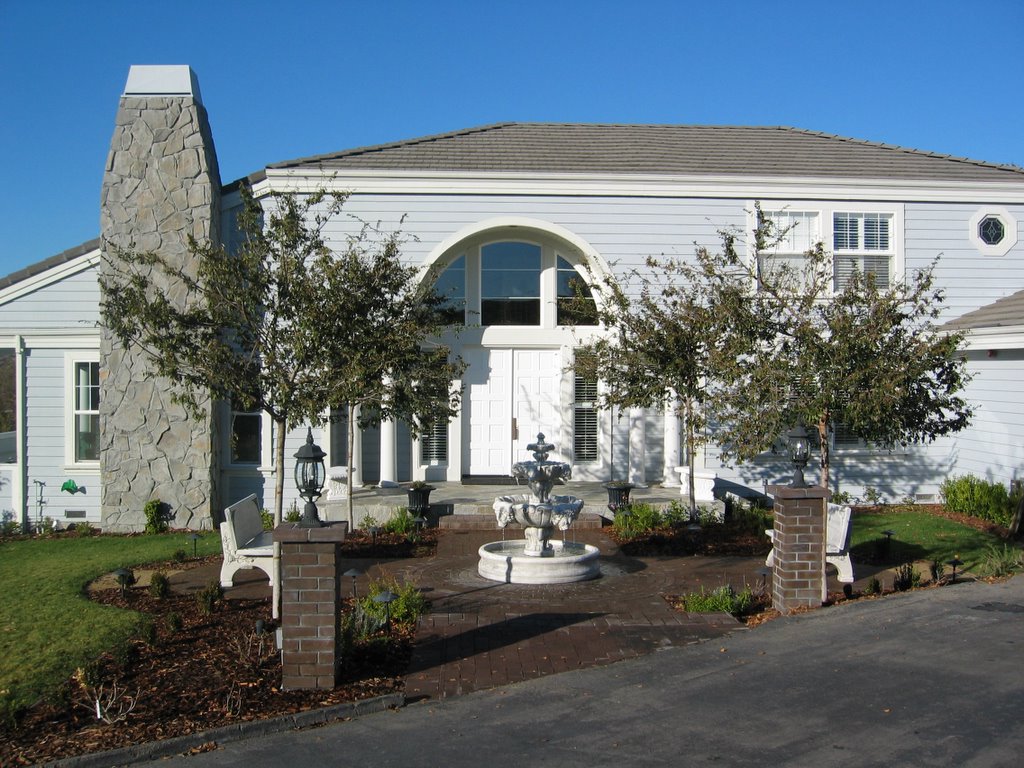
  • The Palace. Its tiered fountains, Baroque statuary, and manicured boxwood attempt to recreate Versailles — albeit on a slightly smaller scale. Just what point the homeowner is striving to make may be a mystery, but your counterpoint can be more clear: simplify. Be authentic. Go native, even. Just as Versailles was designed to celebrate man's mastery over nature, your garden can celebrate the uncertainty, the maddening unpredictability, of a natural system. Sure, the very idea makes you nervous. But with a little professional help you'll pull it off, and your front yard — not your neighbor's — will be the talk of the block.

    There are other neighbors we could analyze: The Museum. The Orchard. The Junkyard. (Although if you live next door to Great Dixter… well, there's really no point in doing much more than setting up a lemonade stand.) The point is, whether you want to distinguish your home to raise your property value or just to make it yours, sometimes the nearest inspiration lives next door.

    Who lives next door to you?
  • Jan 25, 2008

    Red Ink, Green Joy

    Lunaria annua (Money Plant),
    by Christian Fischer


    On my soggy drive home today, talk radio was filled with opinions about the pending "economic stimulus package" and the looming recession driving it. Lots of doom and gloom, both here and abroad. And it got me thinking (as most things do) about gardens and the people who live with them.

    On the one hand, a well-designed garden is a true luxury: it doesn't shelter us from these incessant rains, it doesn't furnish us with cotton or wool to spin into garments. It costs money to design, money to install, and money to maintain. The average bribe rebate from our government will be something like $1600, which will hardly buy you a yard full of gorgeous plants, much less my design fees to wrap them up into a dramatic and fabulous package. Let's face it, you need a custom garden about as much as you need quilted teddy bears on your bath tissue.

    On the otherhand, a well-designed garden may be an absolute necessity, especially in darker times. It can save you money on energy and water through intelligent planting design and efficient irrigation and lighting. It can lower your grocery bill by providing physical sustenance, i.e. delicious fruits and vegetables, every month of the year. But most importantly, it can bring you joy every day by creating an environment filled with vibrant colors, intoxicating scents, soothing sounds, bejeweled birds and butterflies, or those priceless spaces where your children can play or you can relax.

    So what would I advise to someone who wants to upgrade their landscaping, but isn't sure now whether that's such a good idea? Obviously, I can't tell anyone how to prioritize their budget, and I certainly don't advocate going deep into debt with a landscaping project. But given that it is a short-term investment in your spirit as well as a long-term investment in your most significant asset, maybe — just maybe — a well-designed garden is a luxury you can't live without.

    Jul 21, 2006

    Ha! Told You So.

    Just in time to prove my point about landscaping adding value to a home, Kiplinger's Personal Finance writes that "creating an outdoor retreat can be a worthwhile but costly venture. So make sure your money is well spent on features that add the most value to your property." Top items on the list include a covered patio and an outdoor kitchen; but luxury additions such as an outdoor fireplace, television, and grand water feature may not yield you a return on your investment.

    Jul 11, 2006

    Dressing To The Nines

    As I wrote last time, a minimal investment in landscape staging can easily be assured of a 100% return, so there's no reason not to get a little dressed up when you're joining the home-sale dance.

    But if you really want to see some results, consider dressing to the nines.

    In 2003, Smart Money magazine reported that an investment of 5% of your home's value could return as much as 15%. So let's revisit our old listing : instead of 1%, you decide to bite the bullet and invest a whopping 5% of that $800,000 value -- or $40,000 -- into upgrading your landscape. Now we're talking about more than just a bit of greenery: this kind of money will buy you an arbor, new pathways, a deck, an outdoor kitchen, and/or a water feature... significant upgrades that really stick in the memories of potential buyers, and help them imagine themselves relaxing under the arbor or flipping steaks on the grill. If someone wants to pay a 7.5% premium -- certainly not unheard of in this market -- to call this oasis their own, you've just netted $20,000.

    Where to start? Consult a professional landscape designer, who will be able to evaluate your yard's potential and offer suggestions on improving the landscaping as well as overall curb appeal. Whatever rule of thumb you follow, you can be sure that any well-executed landscape design will more than pay for itself.

    Jun 30, 2006

    Dressing Up To Go To The Dance

    Considering selling your home? Don't join the dance without getting dressed up first.

    Joy Valentine of Coldwell Banker Realty wrote:
    "In discussions with colleagues and based on my own experiences with staging, I suspected that staged homes sell faster and for a higher price than those that are not staged. Wanting to test that theory, I analyzed 2,772 properties sold between March 1 and September 30, 1999, in eight cities: Atherton, Los Altos, Los Altos Hills, Menlo Park, Mountain View, Palo Alto, Portola Valley and Sunnyvale. Out of that group, I took a sample of 129 properties that had been staged, or 4.7 percent of the total. This sample represented condominiums, townhouses and single-family residences. They ranged in list price from $229,000 to $4.8 million. The following results show marked differences between the sample of staged homes and the total group, which consisted of both staged and unstaged properties. For the group of 2,772 properties, the average number of days on the market was 30.9, and the average difference in sales price over list price was 1.6 percent. For the sample of staged homes, the average number of days on the market was 13.9 -- about half of the time for houses in the general sample. The average difference in selling price over list price was 6.3 percent, nearly four times as much as for the other group of homes."

    So, class: let's say you want to enjoy that 6.3% increase, so you decide to stage your home. You do want to retain some of the profits, so you spend less than the full 6.3% -- let's say 4% -- on staging.

    Now if landscaping were, say, one-quarter of your staging budget, that would be .25 x 4% = 1% of the list price. Which means an $800,000 property -- the median home price in Silicon Valley in May-- could invest up to $8,000 in landscaping and be pretty confident of earning that investment back.

    Not too shabby, but wait! There's more!

    As I will write next time, dressing just a little fancier -- go ahead, bust out the pearl earrings or mother-of-pearl cufflinks -- can make your time at the dance significantly more enjoyable.

    Jun 19, 2006

    Hiring a Designer: Part 3

    A friend recently wrote me to ask:

    "My wife and I are thinking about changing around our backyard a bit... She has some grand ideas and wanted to see how this process works. If we wanted to work with you, what are the fees, how do we find a contractor to do the work... you know the usual stuff..."

    I recently shared my answers about selection criteria and fees for landscape design. Here, I'll briefly describe how the design process works:

    The process itself usually has 5 distinct phases:
    1) Discovery - interviewing you, measuring and documenting your site, researching municipal ordinances (e.g. drainage requirements) that can affect the design, etc.

    2) Functional Planning - abstractly determining how the various areas of your site should work and interact, e.g. where the BBQ should live relative to the swingset.

    3) Preliminary/Schematic Design - giving general form to the functions determined above; this is the color drawing that people drool over. See one example of mine -- notice that the circular deck (lower left) isn't described in any more detail than "Wood Deck"; this is typical generality for this phase. Start talking to contractors now.

    4) Final/Construction Plans - the "blueprints" that your site gets built from, including specific plants/locations, hardscape dimensions & finishes, irrigation & lighting recommendations, and other details; for instance, that "Wood Deck" might now be called out as "Redwood 2x4 flooring, countersink screws, stain Mahogany & seal". Contractors develop bids from this. Note that unless your professional is licensed (as an architect or contractor), they are legally prohibited from providing dimensions, grading or drainage specifications, or other construction details.

    5) Installation - The contractors' time to shine, but you might still want your designer around in a supporting role, e.g. inspecting and placing plants, checking that the finished work matches up with the intent of the design, making substitutions and judgment calls on the inevitable issues that arise.

    The first 4 phases usually take me at least 6-8 weeks, again depending on the complexity of it all. The installation can take weeks or months depending on the contractor. For best prices and availability, start your planning around December and your construction as soon as weather permits. Also, have a firm budget for design and construction, just as you would for buying a home. Don't hire someone to provide a design and then ask "how much will this cost?" You're wasting your money and everyone's time. Current thinking is to spend 5-10% of your home's value on landscaping, for a 1-3x ROI when you sell.

    Jun 12, 2006

    Hiring a Designer: Part 2

    A friend recently wrote me to ask:

    "My wife and I are thinking about changing around our backyard a bit... She has some grand ideas and wanted to see how this process works. If we wanted to work with you, what are the fees, how do we find a contractor to do the work, are you modern, do you get it... you know the usual stuff..."

    I recently shared my answer for determining the type of professional you need. Here, I'll discuss how much to budget for a landscape design:

    Fees are all over the place. Some people charge for time (hourly rate) + materials (usually purchased at a discount & marked up); others charge a flat fee; others use a combination of these. Personally I don't enjoy record-keeping, so I work for a flat fee that I determine based on the size and complexity of the project. I'm finding that $1 - $1.50 per designed square foot is a useful starting point, then scale up or down if your project is more or less involved.

    If someone wants to hire me for services that normally aren't covered by the flat fee (for instance, buying pots or plants or making a presentation to your neighbor), then I charge hourly + materials.

    Often "design-build" firms -- i.e. contractors that also provide design services -- will use the design fee as their loss-leader to make money off the installation. In other words, they'll discount their design work to reel you in… then take a handsome profit on their construction costs. Obviously, this depresses the market value of my work, and it also deprives you of reliable checks and balances on the quality of the installation. That's why I generally don't like d-b firms.

    Next up: The Process…


    Jun 5, 2006

    Hiring a Designer: Part 1

    A friend recently wrote me to ask:

    "My wife and I are thinking about changing around our backyard a bit... She has some grand ideas and wanted to see how this process works. If we wanted to work with you, what are the fees, how do we find a contractor to do the work, are you modern, do you get it... you know the usual stuff..."

    My answer is worth sharing:

    Depending on what you want to do, there are different areas of expertise to look into:
    -At the top of the food chain are landscape architects, who are licensed to design structures and complex systems that have health & safety implications, as well as plantings, irrigation, and lighting;
    -Landscape contractors are (well, should be) licensed to build structures and install hardscape and irrigation, and design anything they build;
    -Landscape designers (like me) legally can't do anything more than develop plans for planting, irrigation, & lighting; we can call out general hardscape locations and finishes, but can't specify how they should be built. Because there's no requirement for licensure or even education, any hack can call themselves a designer... obviously. ;-)

    You can check out the following industry associations' sites for more information on each:
    - Landscape architecture
    - Landscape contractors
    -Landscape designers

    Next up: Fees…


    Feb 25, 2006

    Postscript: Curb Appeal

    The Palo Alto home profiled in my Curb Appeal post has sold... for 10% over the list price. Did the landscaping have anything to do with it?

    Feb 10, 2006

    Curb Appeal

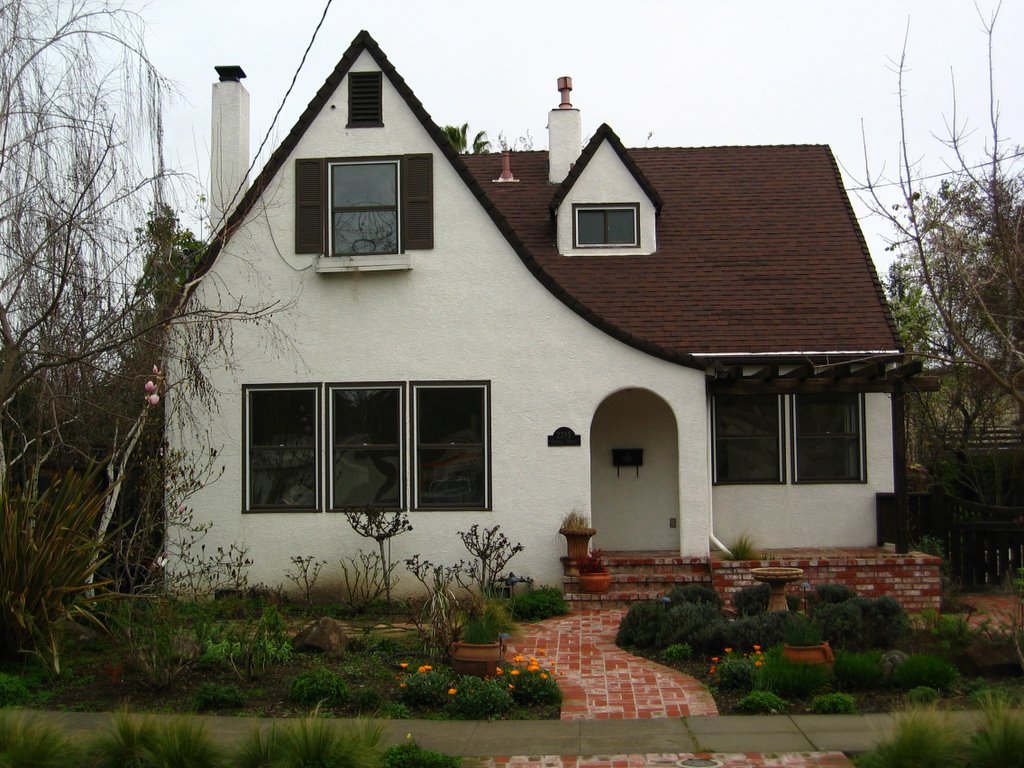
    How do you make a house look great in preparation for offering it for sale? One of the most important factors is that hard-to-define quality of "curb appeal." The changes don't need to be huge; just some judicious color and some handsome accents can change the potential buyer's first impression from "ho-hum" to "gotta have it!"
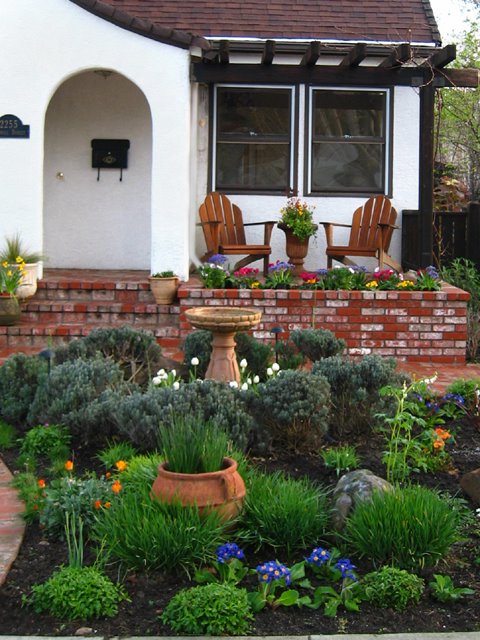
    Here's an example of some subtle changes that add up to a great effect for this English cottage style garden:
    before…
    …and after
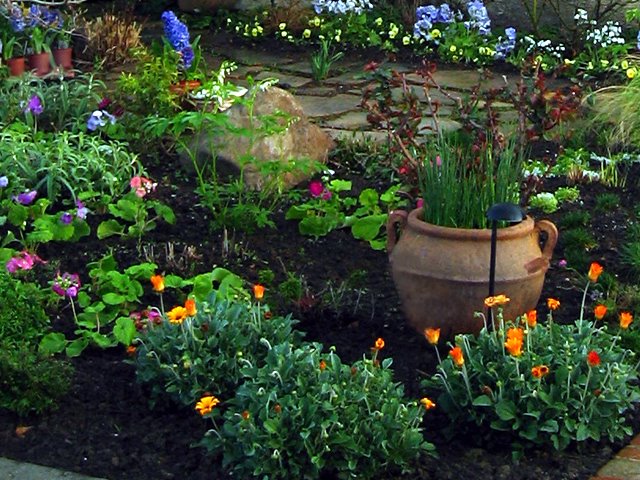
    with the addition of some color
    and a little style.

    The best part is, these changes don't need to be expensive. The transformation above cost about $1000 in plants, mulch and labor; the sellers of this home at 2255 Cornell Street estimate it added about 5x that amount to the home's desirability.

    Nov 26, 2005

    The Value of Design

    I came across a very nicely done article on the "Value of Design" at an architect's web site today. Even though the original was written regarding the architecture of buildings, I feel it's worth paraphrasing for landscape design.

    Value of Design
    (© Coldham Architects LLC, Amherst, MA)

    "There is an oft held perception that fees paid to design professionals might be better spent on 'getting more building'. Let me explain why I think that the best way to get more [garden] is to spend time and money on a thorough, professionally managed design process. Let me give you… specific ways in which design adds to a [garden]'s value."

    First, good landscape design means yielding more functionality and pleasure out of less space. Such efficiency means being clear about needs and priorities, as well as what is allowed (or not) by municipal codes. This is why Verdance takes such pains to interview our clientele thoroughly, including researching codes and precedents, before we ever put pen to paper.

    Second, "good design adds value… by reducing operating expenses." Whether it's a water-thrifty landscape that saves both water and power, or well-placed deciduous trees that even reduce HVAC costs inside the home by providing shade in the summer and allowing light in the winter, it's actually possible to quantify the benefits of a thoughtfully designed landscape.

    Third, "good design adds value… by anticipating and accommodating change." After all, a natural system is the embodiment of change: plants grow and die, features and amenities wear and weather, and use patterns vary over time as more or fewer people use the landscape. A professional designer will anticipate some of these changes (for instance, spacing plants for their mature size, not their size at planting time) and accommodate others (e.g. laying empty conduit beneath new hardscape for additional lighting wire or irrigation lines in the future). Without this forethought, the homeowner will either spend far more money and time trying to retrofit a limited system or, sadly, choose to live without the improvements.

    And "the final way in which good design adds value is by making something more beautiful". It sounds so obvious, and obviously no one sets out to design an unattractive garden, but the professional designer's expertise is in creating beauty in unexpected ways, and in fine details which may escape the untrained hand. If a landscape has, as the original author says, "real appeal and becomes loved, it will be cared for and enhance the image of those connected with it."

    And this is the ultimate benefit of good design: no matter what it costs, the value it provides is priceless.